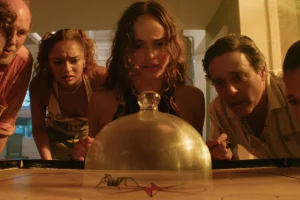
Dozens of social media influencers flown out to an island retreat are in for a creepy-crawly surprise in Spider Island, a new creature feature from director Christopher Smith that premiered at London’s FrightFest and debuts in Prague cinemas this weekend. The can’t-miss premise—underscored by the film’s Czech title, Osm nohou a milion followerů (Eight Legs and a Million Followers)—is run aground by a flat script that pairs precious few laughs with zero scares, resulting in a horror flick that fails to meet the modest standards set by recent arachnid features like Infested and Sting.
Spider Island stars Andy Nyman (Ghost Stories) as David, a greedy businessman preparing to open a luxury resort on a tropical island. To generate some advance publicity, he flies in a collection of social media personalities who can promote the location to their millions of followers. The influencers are deliberately obnoxious, and screenwriters David Quantick and Christopher Jolley waste little time establishing them as vapid narcissists whose impending encounters with the local wildlife we aren’t supposed to mourn.
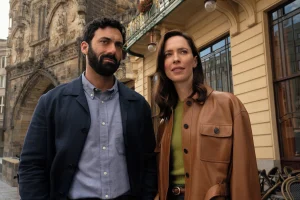
Also on the island is Claire (Rose Williams), an environmentalist determined to expose David’s questionable business practices, along with her father Curtis (Tim McInnerny), a former West End actor who happens to operate a competing hotel on the other side of the island. Justin Daniels Anene is Ed, a environmentally conscious influencer who may (he hopes) become a romantic interest for Claire.
The setting certainly looks the part. Shot in Mauritius, Spider Island makes attractive use of its tropical locations, with beaches, jungle, and luxury accommodations that should provide an ideal backdrop for an escalating creature-feature nightmare. But Smith, who has made some excellent horror films including Creep, Severance and Black Death, generates virtually no atmosphere from them. The movie is dead on arrival, presented with such a lightweight tone that it clearly wants to operate as a horror-comedy but without either the scares or jokes required to make that combination work.
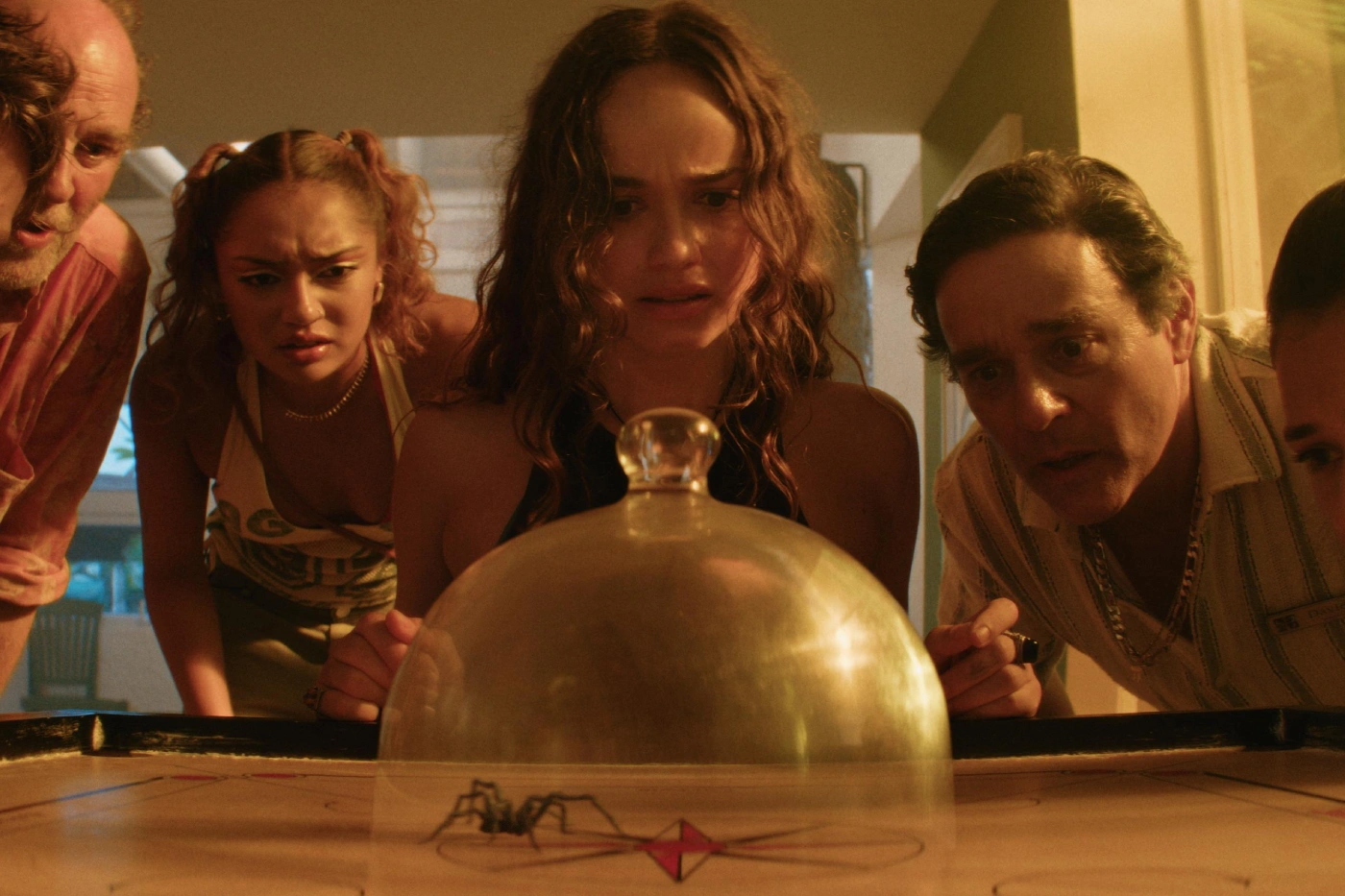
The spiders themselves are part of the problem. These aren’t enormous mutant arachnids or supernatural monsters, but normal-sized spiders whose primary weapon is an aggressive bite that injects venom into their victims. There’s nothing inherently wrong with that—see the 1990 classic Arachnophobia—but Spider Island never figures out how to make them behave convincingly or exploit the things audiences naturally find unsettling about them.
They don’t spin webs around victims, trap anyone in cocoons or drain bodies of blood. Instead, they move around in packs and literally chase characters across the island, despite traveling at a speed that should make escape little more difficult than a brisk walk. The sight of dozens of spiders crawling together could have been unnerving, but the film stages these sequences like conventional monster pursuits without accounting for the fact that its monsters are only a few inches tall and can be (and frequently are) quite easily stomped on.
At one point, a character advises the others not to move because the spiders can’t see them if they remain still, directly recalling the dubious T-rex survival strategy from Jurassic Park. For a moment, it seems like the movie is finally making a joke out of its own absurdity. Nope. We’re apparently supposed to take the advice seriously, despite the film opening with a close-up of eight eyes that can presumably detect more than just motion.
More baffling is the decision to largely abandon the influencers once the spider attack begins. A movie about obnoxious internet celebrities discovering that follower counts won’t help when they’re trapped on an island overrun with venomous arachnids practically writes itself, and Spider Island initially appears to understand the possibilities. Some of the influencers are even played by real-life social media personalities, which ought to add another layer to the satire.
But most are dispatched relatively quickly, and because they’ve been written with virtually no charisma or distinguishing characteristics, their exits generate neither suspense nor much comic satisfaction. Instead, the movie increasingly follows David, his assistant Rachel (Carlotta Banat), Claire, Curtis and a single influencer, played by Avani Gregg, around the island as they attempt to escape the swarm.
Even those spiders might have provided some visceral entertainment had Smith embraced the nasty side of the material. His earlier films certainly weren’t shy about bloodshed, and a creature feature built around dozens of venomous bites offers plenty of opportunities for gruesome body horror. Instead, Spider Island is remarkably tame. There’s no blood or gore as victims quickly succumb to venom rather than suffer the elaborate fates that genre audiences might reasonably anticipate.
Horror features had a great start to the year, led by box-office hits like Obsession and Backrooms and first-rate features like Hokum and 28 Years Later: The Bone Temple. But Spider Island is the second straight lazy horror release this summer, following Eli Roth‘s Ice Cream Man, that feels engineered around an easily marketable premise rather than driven by any kind of artistic vision. Unlike that film, it doesn’t even have the elaborate gore effects that might appeal to genre devotees.
There’s an entertaining movie somewhere in the idea of sending a collection of social media influencers to paradise and unleashing thousands of spiders on them. Spider Island somehow manages to avoid making it. Pretty Mauritius photography can’t compensate for a creature feature without scares, a comedy without laughs or a spider movie that doesn’t seem particularly interested in what makes spiders frightening. Eight legs, a million followers, and precious little reason to watch.