The 33rd edition of Days of European Film will return next month for its 33rd edition, bringing a wide-ranging selection of contemporary European cinema to Prague, Brno, Ostrava and other cities across the Czech Republic. Running from April 9-14 in Prague, the festival will again position itself as a showcase for current European filmmaking, mixing titles from established directors with new voices, documentaries and audience-friendly side programming.
This year’s lineup points to a program built around range rather than a single thematic focus. Organizers are highlighting new work from well-known filmmakers, a competitive debut section, a sidebar devoted to music-focused films and a retrospective centered on Italian director Paolo Sorrentino. Several titles will screen in Czech distribution premieres or preview screenings, while the broader program also includes events for children, seniors and film professionals.
For Prague audiences, the main festival venues will be Kino Světozor, Edison Filmhub and Kino Přítomnost, with parallel screenings in Ostrava’s Minikino. The Brno portion follows from April 13-19 at Kino Art, before the festival expands to regional cinemas from April 15-19.
A broad snapshot of contemporary European cinema
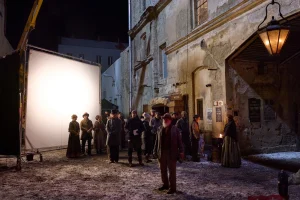
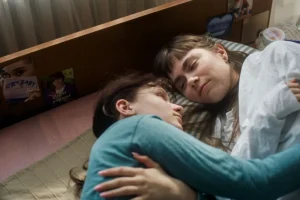
The core of this year’s Days of European Film festival sits in the Panoráma section, which aims to capture the breadth of current European production. Among the most prominent titles is The Stranger, François Ozon’s new black-and-white adaptation of Albert Camus’ novel set in 1930s Algeria. The festival is also presenting Winter of the Crow, directed by Kasia Adamik, which returns to Warsaw in late 1981 and the tense final years of communist rule in Eastern Europe.
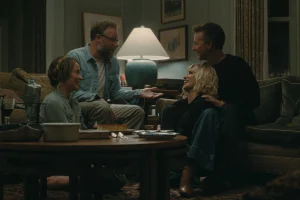
Historical memory and political upheaval continue elsewhere in the lineup. Lithuanian director Karolis Kaupinis’ Hunger Strike Breakfast revisits the early 1990s, when Russian soldiers occupied a Lithuanian television station, while Re-creation, from Jim Sheridan and David Merriman, examines how truth shifts during the reconstruction of a crime. Vincent Munier’s Whispers in the Woods, an award-winning documentary, adds a more reflective note, combining a portrait of the French forest with a personal meditation on family.
Other Panoráma selections turn toward questions of identity, intimacy and social expectations. Isabel Coixet’s Three Goodbyes, Janicke Askevold’s Solomamma and Urška Djukić’s Little Trouble Girls all explore private lives under pressure, whether through family tensions, reproductive choices or the conflict between faith and sexuality. The Czech contribution includes Zuzana Kirchnerová’s Caravan and David Súkup’s animated feature Tales from the Magic Garden.
Beyond the main showcase, the festival’s competition section highlights emerging filmmakers whose first features have already gained traction on the international circuit. Titles include White Snail, which received a Special Jury Prize in Locarno, Cato Kusters’ Julian, Emilie Thalund’s Weightless and Oscar Hudson’s Straight Circle.
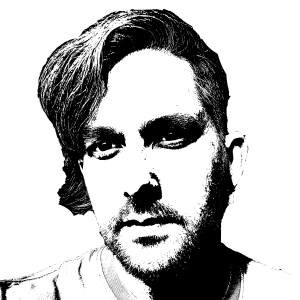
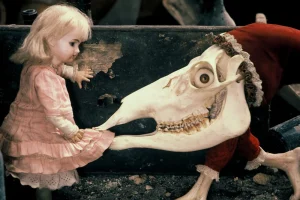
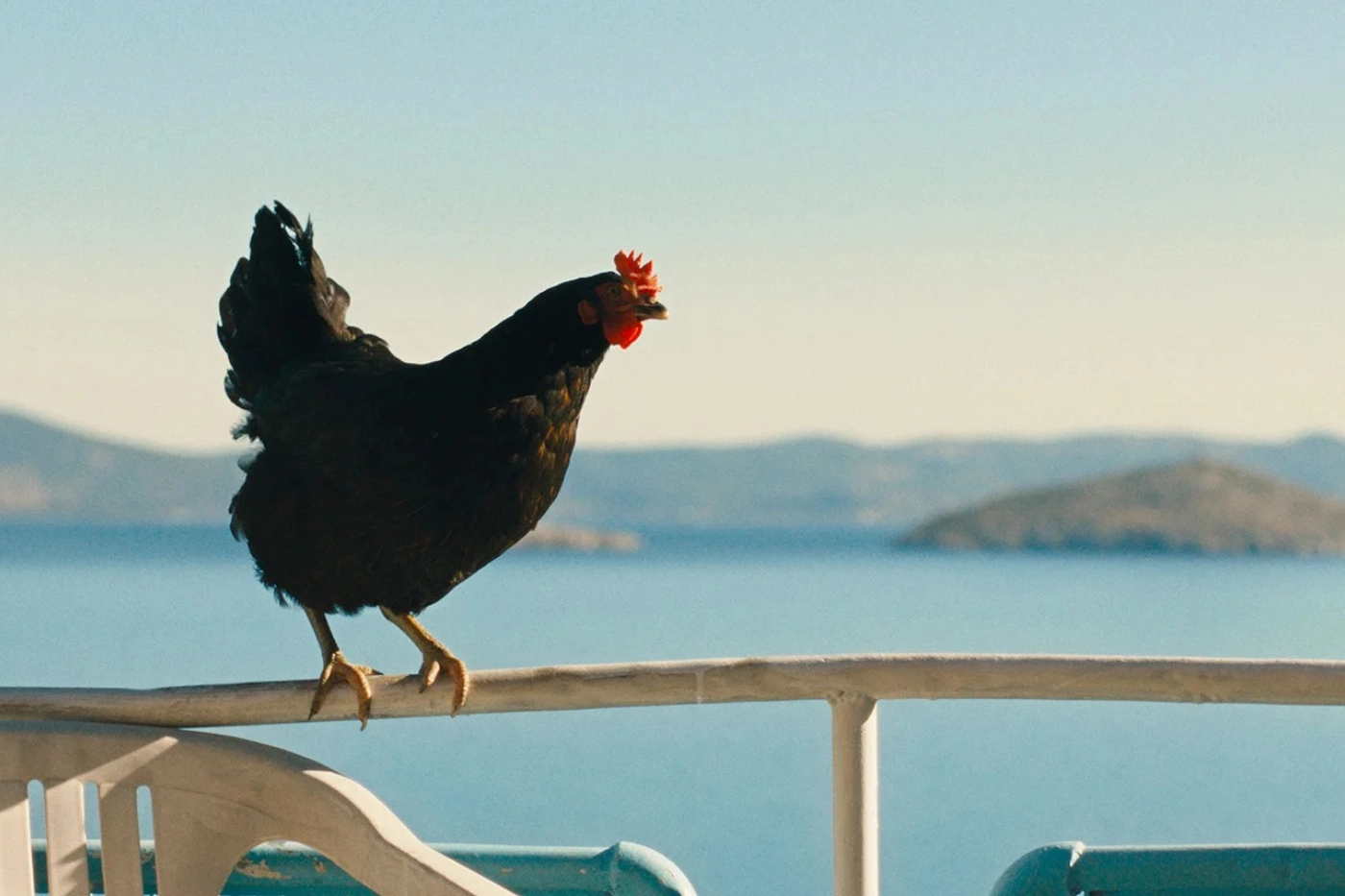
Another section, Film and Music, gathers films in which music plays a central creative role. These include György Pálfi’s visually striking Hen (pictured at top), the archival documentary Nova 78′, the bittersweet comedy Maspalomas, Celtic Utopia and California Schemin’, the feature directorial debut of James McAvoy. The selection reflects the festival’s interest in programming films that cross between narrative cinema, performance and pop-cultural history.
Sorrentino retrospective adds a major auteur focus
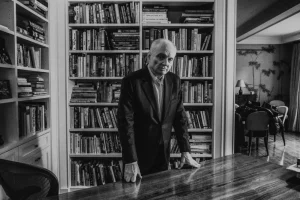
Alongside its survey of new titles, European Film Days is devoting its retrospective program to Paolo Sorrentino, one of the most recognizable figures in contemporary Italian cinema. The sidebar gives the festival a stronger auteur focus and ties the event to a broader history of European art-house filmmaking, balancing the newer discoveries elsewhere in the lineup.
The selection includes The Great Beauty, Sorrentino’s Oscar-winning portrait of a writer drifting through Rome, as well as Youth, Il Divo, This Must Be the Place and La Grazia. Taken together, the films trace many of the qualities most associated with the director’s work: stylized visual design, irony, melancholy and an interest in power, performance and spiritual exhaustion.
The retrospective will also bring one of Sorrentino’s key collaborators to Prague. Editor Cristiano Travaglioli is set to attend in person to introduce screenings and lead a masterclass during the festival. That guest appearance gives the program added value for local audiences and film professionals, particularly as European Film Days continues to position itself not only as a public-facing festival but also as a space for industry discussion and contextual programming.
That broader ambition is also visible in the festival’s accompanying events, which include discussions, school and senior screenings, workshops for children and seminars for film professionals. The program will also feature installments of Aleš Stuchlý’s Mentální hygiena, a discussion format pairing screenings with live conversations.
Days of European Film remains one of the Czech Republic’s more accessible annual surveys of European cinema, extending well beyond Prague into Brno and a network of regional venues. This year’s edition will also feature accompanying events including discussions, school and senior screenings, workshops for children and seminars for film professionals. For more details, visit the official festival website.