A Czech documentary chronicling the rise of the protest movement Million Moments for Democracy has become the center of a growing political dispute over state support for politically charged films.
Million Moments (Chvilky naděje), directed by filmmaker Amálie Kovářová, follows activists Mikuláš Minář and Benjamin Roll during the movement’s mass anti-government demonstrations between 2018 and 2021. The film received more than CZK 1.7 million in public support from the Czech Audiovisual Fund, prompting criticism from members of the current government led by Prime Minister Andrej Babiš.
Culture Minister Oto Klempíř has cited the documentary as one reason for a planned amendment to the law governing the Czech Audiovisual Fund, arguing that public money should not support politically partisan projects. Former Culture Minister Martin Baxa and the filmmakers reject accusations of political influence, insisting the fund operates independently from the government.
Documentary about protest movement sparks political debate
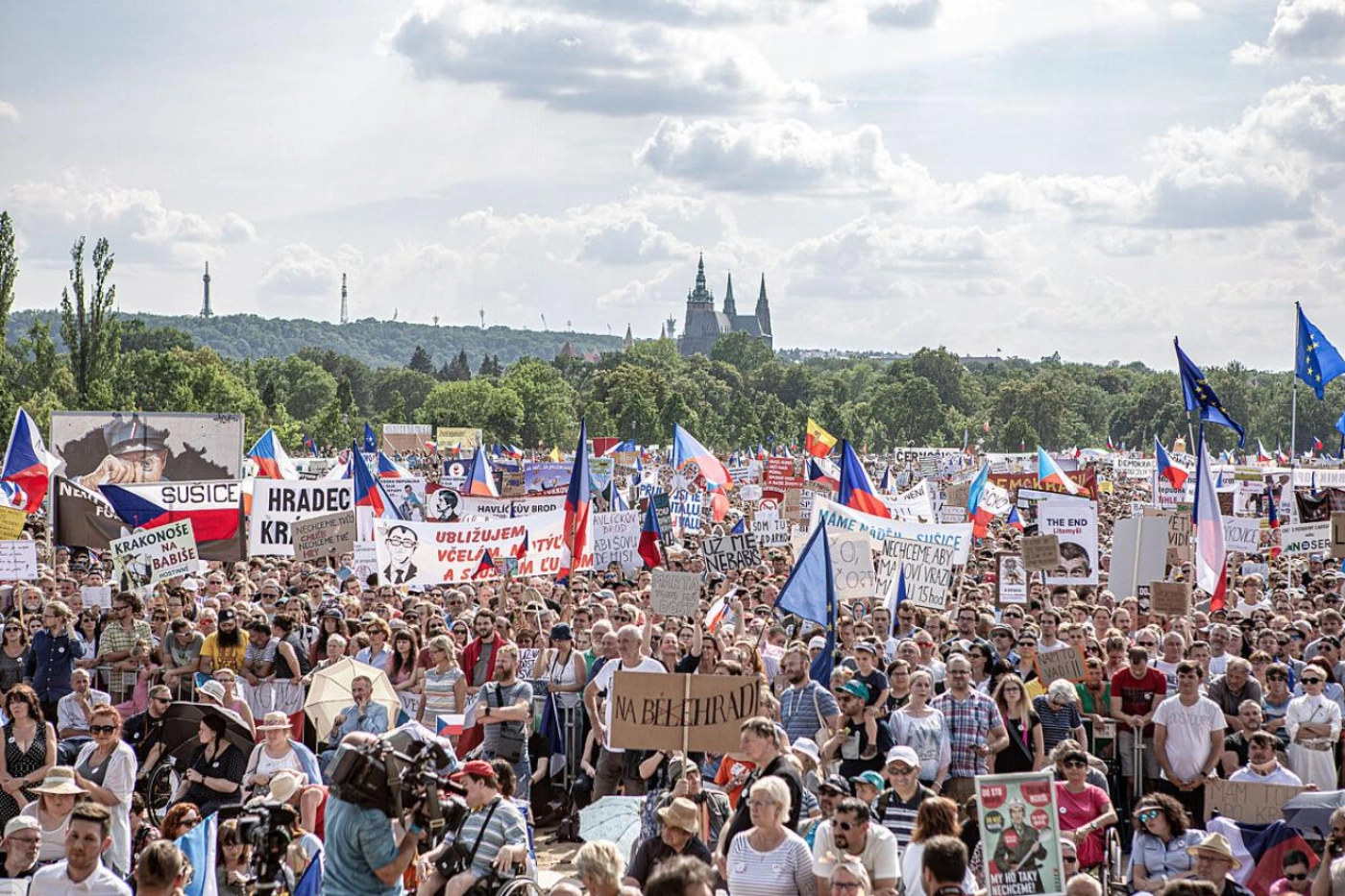
Released in 2025, Million Moments documents the activities of Million Moments for Democracy, the civic movement that organized some of the largest public demonstrations in Czechia since the Velvet Revolution. The protests, centered largely on Prague’s Letná Plain, targeted former Prime Minister Babiš and former President Miloš Zeman over concerns about democratic institutions, media independence, and political accountability.
According to the film’s official synopsis, Kovářová spent six years filming the movement and its founders behind the scenes, charting the organization’s rapid growth, internal struggles, and political ambitions. The documentary presents Minář and Roll as young activists attempting to mobilize civic engagement during a period of political polarization.
The film’s political framing has now become a source of controversy. In comments published this week by Czech outlet iDnes.cz, Babiš described the state support for the documentary as evidence of “the misuse of public money and state institutions in a political fight against us.”
Klempíř echoed similar concerns, calling the funding decision “very problematic” and saying the case highlighted doubts about the neutrality of the funding system. He said his ministry would prepare changes to the law regulating the Czech Audiovisual Fund in order to “strengthen transparency” and clarify evaluation criteria for supported projects.
The minister argued that cultural funding should prioritize professional quality rather than “political activism.” His proposal could potentially affect how future documentaries and politically themed projects are evaluated for state support.
Kovářová has defended both the film and the funding process, saying the documentary was assessed on artistic grounds by an independent body. She stressed that Czech governments do not directly decide which projects receive funding from the Audiovisual Fund.
Questions over activism, independence, and public support
The controversy has also renewed scrutiny of Kovářová’s own involvement with the Million Moments movement during production. In earlier interviews, the director openly described herself as an activist and acknowledged that she previously created campaign-style videos opposing Babiš and Zeman before joining the movement’s media activities.
Kovářová later said she stepped away from the organization during post-production in order to gain greater critical distance from the subject matter. She has argued that the documentary is ultimately a broader story about civic engagement and democratic participation rather than a film solely focused on specific politicians.
The project reportedly failed to secure support in its first two applications before eventually obtaining funding after an experienced producer joined the production team. Public support ultimately included CZK 800,000 for production, CZK 200,000 for distribution, and additional audiovisual incentives worth more than CZK 700,000.
Former minister Baxa rejected claims that the previous government influenced the process. He noted that decisions are made by council members elected by parliament and that ministers have no authority to intervene in grant allocations once projects enter the evaluation system.
The debate has also widened into a broader discussion about public support for politically oriented documentaries in Czech cinema. Critics of the current system have pointed to other recent state-backed nonfiction projects dealing with divisive political subjects, while supporters argue that documentary filmmaking often necessarily engages with contentious social and political issues.
Questions have also emerged about the documentary’s commercial performance. Official box office data has not been publicly released, though estimates cited by Czech media place theatrical attendance in the low thousands. Kovářová has suggested total viewership, including school screenings and alternative presentations, may have reached around 10,000 viewers.