
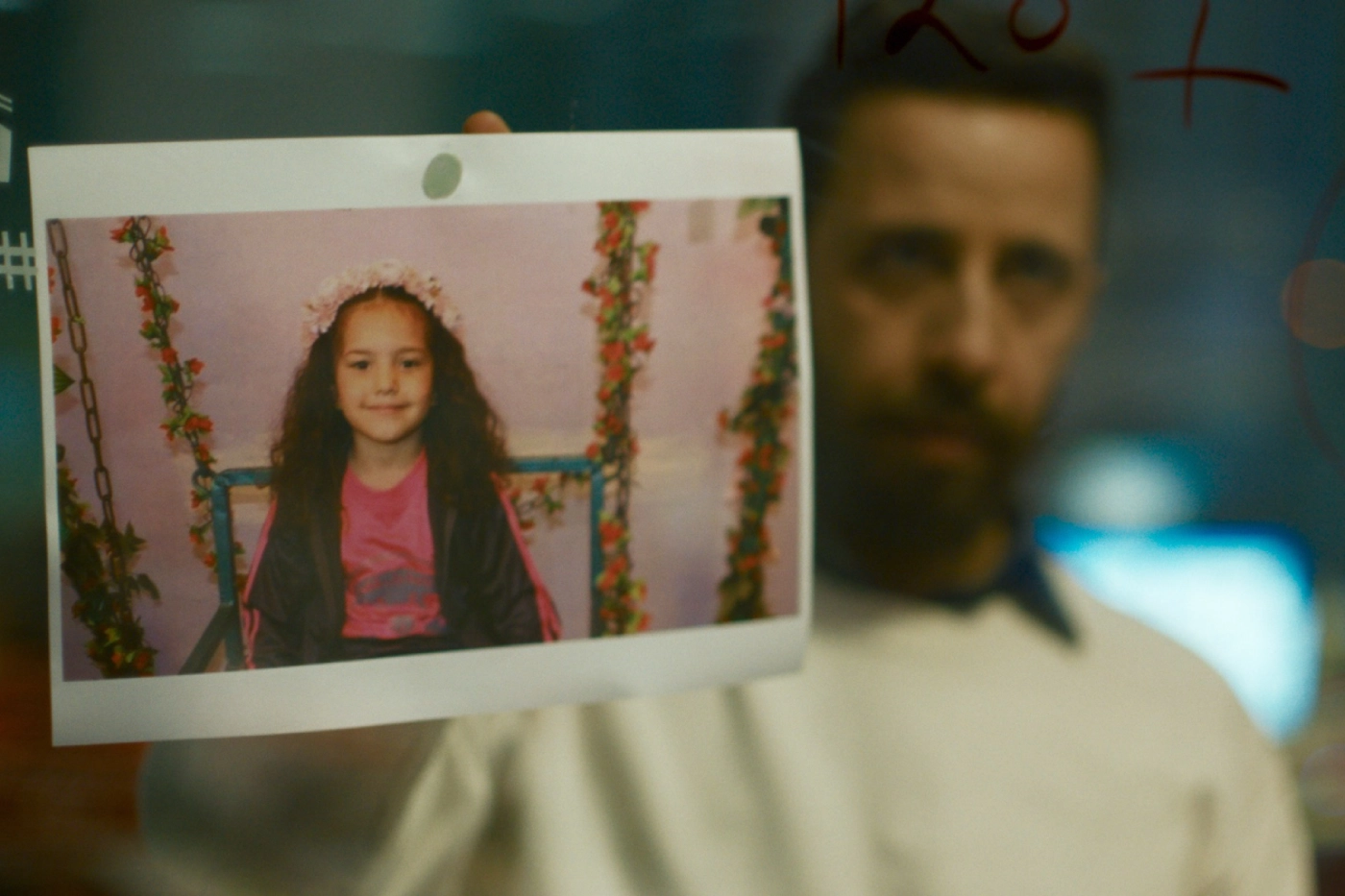

A five-year-old girl caught in an active war zone pleads for help from emergency responders in The Voice of Hind Rajab, which was nominated for Best International Feature at this year’s Academy Awards and opens in Prague cinemas this weekend (with English-subtitled screenings at select showings at Kino Světozor). What might have played as a gripping contained thriller in the mold of Denmark’s The Guilty—and its U.S. remake starring Jake Gyllenhaal—becomes something far more overwhelming through filmmaker Kaouther Ben Hania’s unconventional approach: while much of the movie is dramatized, the voice heard on the other end of the phone is gut-wrenchingly real.
Set on Jan. 29, 2024, the film reconstructs the desperate efforts of Palestinian Red Crescent workers trying to save Hind Rajab, a young girl trapped inside a car in Gaza after an attack has killed the family members around her. Ben Hania stages the film entirely within the Red Crescent operations room, where volunteers and coordinators field calls, attempt to identify Hind’s location, and work frantically through layers of bureaucracy and military coordination to secure a route for an ambulance. The setup is inherently tense, and the film uses that tension with ruthless precision.
At first, The Voice of Hind Rajab plays like a procedural, with emergency workers trying to solve an impossible problem in real time. Omar (Motaz Malhees), initially takes a call from Hind’s cousin and then from Hind herself, piecing together the scale of the horror as the situation worsens. Rana (Saja Kilani) takes over as the child’s fear and isolation deepen, trying to keep Hind calm while offering comfort that grows more fragile by the minute.
Frustration grows: while an emergency medical team is just 10 minutes away, the volunteers need to work through levels of bureaucracy to find them safe passage to reach Hind. Mahdi (Amer Hlehel), becomes the film’s grounded practical center as he works through official channels, trying to secure the ambulance’s passage without sending more people to their deaths.
The principal performers inside the operations room are all exceptional, in part because they never seem to compete with the reality at the center of the film. Malhees is devastating as Omar, who first listens in horror as the scale of the tragedy becomes clear, then clings to renewed hope when he reaches Hind directly, only to grow increasingly frantic as rescue efforts stall. Kilani is equally remarkable as Rana, whose bond with Hind becomes the film’s emotional anchor.
Hlehel has perhaps film’s most difficult role, because Mahdi initially registers as an obstacle to action. He is the one insisting on procedure, on coordination, on caution. But the performance gives full weight to the terrible logic of his position: he knows that sending an ambulance blindly into danger could mean more dead civilians, more dead medics, more families destroyed.
What makes the film so punishing is not simply the true story it tells, but the way Ben Hania merges dramatization with documentary reality. The use of Hind Rajab’s real voice could easily have felt exploitative or distasteful, but instead becomes the source of the film’s unbearable power. The dramatized framework draws viewers in with the shape and urgency of a thriller, only to leave them face to face with something that cannot be processed as ordinary cinema. Ben Hania is not softening reality through fiction; she is using fiction to make reality impossible to keep at a distance.
That choice turns The Voice of Hind Rajab into an unforgettable experience, and an extraordinarily difficult one. Even viewers familiar with the story may find themselves blindsided by the sheer emotional force of hearing Hind’s actual voice woven through these scenes, while those who do not know the outcome will likely be crushed by the slow, terrible realization of where the film is heading. This is not the kind of movie that just leaves you in tears. It leaves you feeling hollowed out.
Ben Hania’s direction is controlled and unsentimental, which is crucial. She never overstyles the material, and she resists the temptation to manufacture drama beyond what already exists. The horror comes not from cinematic embellishment, but from delay, helplessness, and the collapse of ordinary systems of rescue and protection.
Some viewers will inevitably wonder whether such a tragedy should be dramatized at all. The Voice of Hind Rajab answers that question less through argument than through execution. Ben Hania’s film is not interested in sensationalizing suffering; it is interested in refusing distance from it.
The Voice of Hind Rajab is one of the most emotionally shattering films in recent memory. It demands to be seen, but viewers should be prepared for its unflinching intensity and the devastating weight of the true events at its core. Ben Hania’s docudrama confronts horror and helplessness head-on, creating a cinematic experience that lingers long after the credits, leaving both the heart and conscience profoundly unsettled.







One Response
Thank you for your perfect review of the movie the Voice of Hind Rajab! I saw the movie three times, it contains very strong humanistic message about oppressed people under occupation.