
A mother struggles to keep things together as her life literally comes crashing down in If I Had Legs I’d Kick You, which played at the Karlovy Vary International Film Festival after debuting at Sundance and is now playing in Prague cinemas courtesy of distributor Aerofilms. This feature-length panic attack approaches parenting struggles with the unnerved intensity of Uncut Gems and features striking direction from Mary Bronstein and a revelatory performance from Rose Byrne. This was the best of the 30 or so features The Prague Reporter caught in Karlovy Vary last year, and one of the top films of 2025.
If I Had Legs I’d Kick You stars Byrne as Linda, a single mother caring for a daughter with a serious pediatric feeding disorder requiring nightly tube feeding and constant medical supervision. Her husband, Charles (Christian Slater), is away at sea, leaving Linda to manage a collapsing apartment, a demanding job as a therapist, and a child whose needs feel increasingly insurmountable.
Bronstein makes the unusual but striking decision to never show the daughter (Delaney Quinn) or even give her a name. While this may initially feel like a gimmick, it quickly becomes integral to the film’s perspective, placing us inside Linda’s fractured headspace. The child becomes less a defined character than an ever-present pressure—abstract, overwhelming, and inescapable. It’s an arresting, effective choice.
What follows is a slow, escalating breakdown. A ceiling collapse forces Linda and her daughter into a shabby motel, where noise, isolation, and sleep deprivation intensify her unraveling. Her professional life offers no relief: difficult patients, a collapsing sense of boundaries, and a therapist (Conan O’Brien) who is both wryly dismissive and, at times, uncomfortably perceptive. Even her husband’s phone calls offer little support, framed more as critique than comfort.
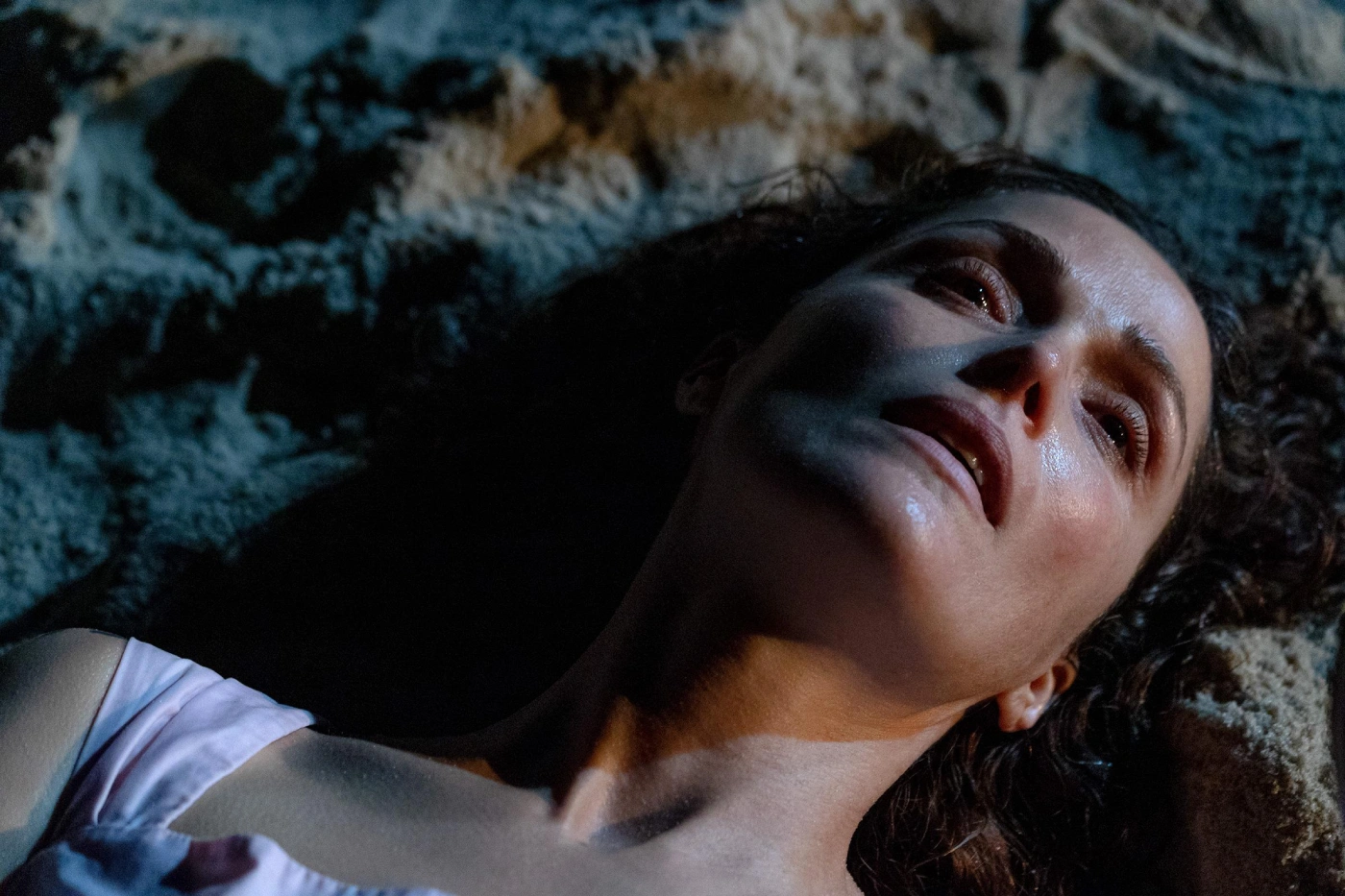
Byrne is extraordinary here, delivering one of the most physically and emotionally exposed performances of her career. Known largely for comedic roles, she is a revelation as Linda, carrying the film through sheer intensity and exhaustion etched into every expression. Her Academy Award nomination was richly deserved, even if she ultimately lost to Jessie Buckley for her equally formidable turn in Hamnet.
The supporting cast operates as a series of pressure points around her. Talk show host O’Brien, in a rare acting role, is a standout as Linda’s psychiatrist: seemingly detached, occasionally cruel, but not without flashes of insight and reluctant empathy. Rapper A$AP Rocky brings understated warmth and ambiguity as Jamie, the motel superintendent who briefly becomes Linda’s closest thing to an ally. Danielle Macdonald (Dumplin’) is also excellent as a patient whose own crisis mirrors Linda’s suppressed desire to escape responsibility entirely.
The film’s themes are grounded in the exhausting, often unspoken reality of parenthood—the sense of being fundamentally unprepared for total responsibility over another life, compounded by systems that offer little meaningful support. Even Charles, Linda’s husband, fails to grasp the weight of what she carries, treating her collapse as something distant and manageable rather than immediate and consuming.
Bronstein’s direction is relentlessly precise. Her sense of pacing and spatial anxiety steadily ratchets up tension, making even brief moments of calm feel unstable. There is an obvious spiritual kinship with the Safdie-adjacent strain of American indie cinema—particularly Uncut Gems and Marty Supreme. Those films just happened to be co-written by her husband Ronald Bronstein, with whom she shares a daughter.
In If I Had Legs I’d Kick You, however, the focus is more explicitly internal rather than transactional, collapsing inward rather than spiraling outward. This is a film about containment as much as collapse: Linda’s world narrowing until every interaction feels like another demand she cannot meet. Even in quieter passages, Bronstein never lets the viewer fully exhale.
Ultimately, If I Had Legs I’d Kick You succeeds as an unflinching study of parental anxiety pushed to breaking point, anchored by one of the year’s most committed lead performances. It is exhausting by design, occasionally overwhelming in its intensity, but never less than compelling. Bronstein transforms domestic stress into something approaching psychological horror, and Byrne meets her halfway with fearless precision.