
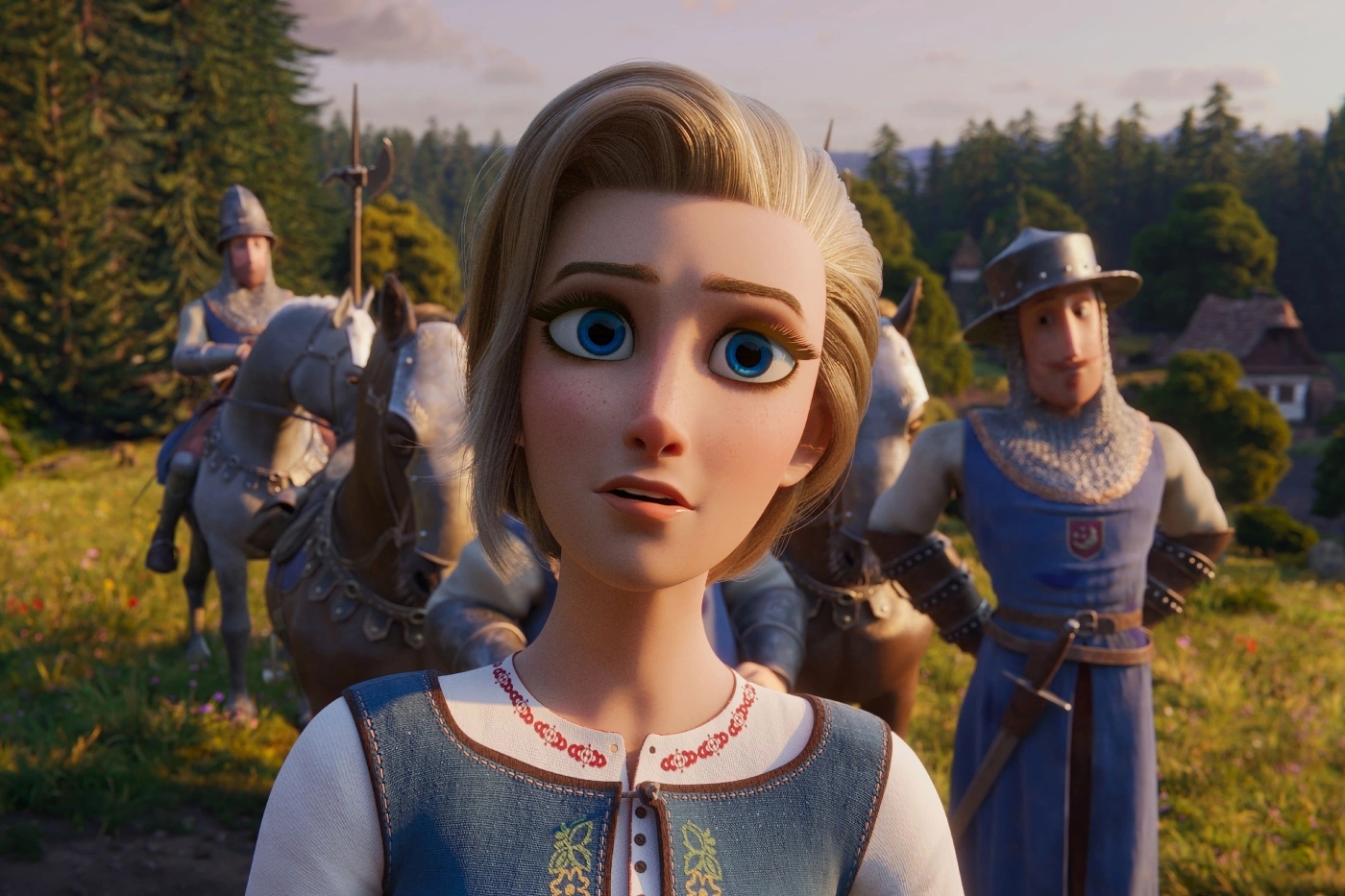
The Czech animated feature The Proud Princess (Pyšná princezna) debuted in the United States on video-on-demand platforms April 7, marking a new chapter in the film’s international rollout. Distributed by Level 33 Entertainment, the English-dubbed version introduces the reimagined fairy tale to a broader audience beyond Central Europe.
The release follows the film’s late 2024 premiere in Czech cinemas, where it revived one of the country’s most enduring screen stories. Originally adapted from Božena Němcová’s literary tale Pride Punished (Potrestaná pýcha), the story has long held a central place in Czech popular culture, largely due to the success of its 1952 live-action version—still considered the most-watched film in Czech cinema history.
Now, the animated retelling is continuing its international expansion, building on distribution agreements across more than 20 territories and positioning Czech animation within a wider global market.
A modern retelling of a Czech classic
Directed by David Lisý and Radek Beran, The Proud Princess reinterprets a familiar narrative for contemporary audiences using 3D animation and updated storytelling techniques. The plot follows a young king—renamed Benjamin in the English version—who becomes enamored with Princess Carolina after seeing her portrait. When she refuses to meet him, he disguises himself as a gardener to enter her kingdom, gradually uncovering her hidden kindness beneath a proud exterior.
The film maintains the core themes of love, pride, and personal transformation that defined earlier versions, while introducing new elements aimed at younger viewers and international audiences. These include additional characters and expanded action sequences, as well as a stronger emphasis on humor.
Production on the film spanned more than five years and involved dozens of animators and artists. The filmmakers sought to balance technological advancement with cultural continuity, incorporating visual motifs inspired by Czech landscapes and preserving iconic moments from the original film, such as musical interludes and set-piece sequences familiar to domestic audiences.
The score also reflects this dual approach, blending new compositions with references to classic melodies associated with the story, reinforcing its connection to Czech cinematic heritage.
Expanding Czech animation’s global footprint
The U.S. VOD debut represents a significant step in the film’s international strategy. While Czech films have historically faced challenges in reaching English-speaking markets, the availability of a dubbed version increases accessibility and commercial potential.
The English-language cast includes William Attenborough, Georgia Lowe, Max Bennet, and Karen Lewis, among others, signaling a targeted effort to position the film for international viewers. This approach aligns with broader trends in European animation, where localized dubbing plays a key role in cross-border distribution.
The film’s overseas rollout began shortly after its domestic release, with confirmed distribution in markets across Europe, Asia, and the Middle East. Industry response has highlighted the universal appeal of the narrative, as well as the film’s distinctive visual style rooted in Central European settings.
Producers have pointed to this combination as a driving factor behind the project’s international traction. While deeply tied to Czech cultural traditions, the story’s themes translate easily across languages and regions, making it a viable export in a competitive animation landscape.
The U.S. release of The Proud Princess also underscores a gradual resurgence of Czech animation on the global stage. Long known for its legacy in puppetry and hand-drawn techniques, the industry has increasingly embraced digital production in recent features while maintaining its narrative and aesthetic identity.