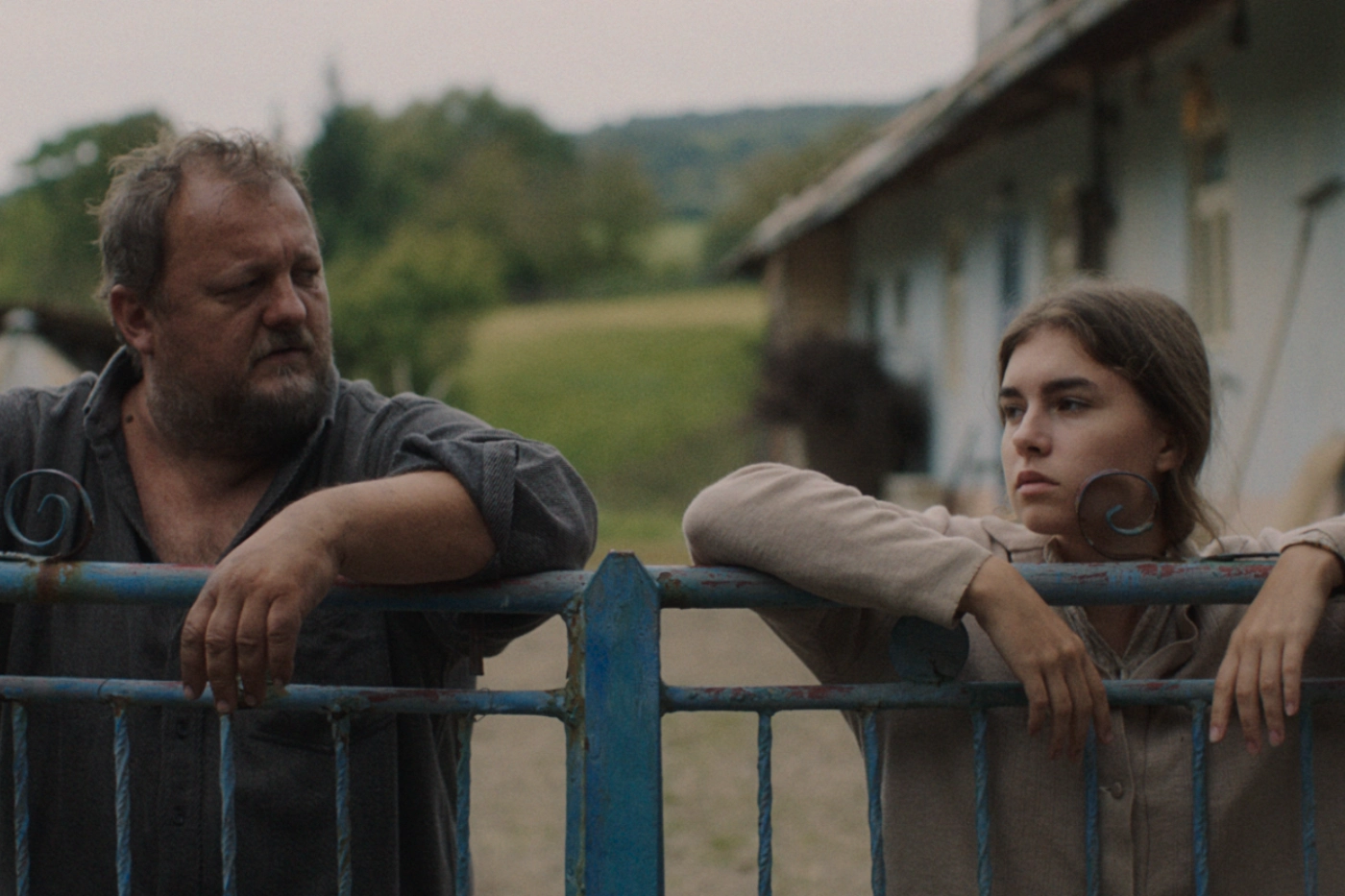
Inhabitants of a Ruthenian village on the eastern border of Czechoslovakia are forcibly evicted from their homes to make way for the Starina reservoir in the early 1980s in Flood (Potopa), which debuted in local cinemas earlier this year and is now streaming with English subtitles on Netflix. Debut director Martin Gonda‘s evocative, quietly powerful tale of the loss of heritage amid the quest for personal freedom was co-produced by Prague-based Cineart TV and financed in part by the Czech Audiovisual Fund, and was recently selected as Slovakia’s official submission to the 2027 Academy Awards.
Flood tells the story of 15-year-old Mara (Sára Chripáková), who lives with her widowed father Alexander (Jozef Pantlikáš) in the Ruthenian village of Ruské in what is now eastern Slovakia. Mara is an excellent student and dreams of attending a military aviation school and becoming a pilot. Her father has other plans: she should remain at home, help tend the family’s land and eventually take a job at the local shoe factory.
Yes, it’s that hoary old parent-child conflict between tradition and personal ambition that dates back at least as far as The Jazz Singer. And from its earliest scenes, we have a pretty good idea where Mara and Alexander’s relationship is headed. Gonda takes an especially leisurely route getting there, too, observing daily life in Ruské with such patience that Flood occasionally resembles an ethnographic documentary.
But there’s another story unfolding around Mara that transforms the familiar material into something much richer. While she desperately wants to abandon her village and the life her father has chosen for her, the communist Czechoslovak government is preparing to take that choice away from everyone.
Ruské is one of seven predominantly Ruthenian villages that were evacuated and demolished during construction of the Starina reservoir between 1981 and 1988. Homes were abandoned, graves exhumed and families relocated to apartments elsewhere in the region. The villages themselves would effectively cease to exist.
Gonda establishes the threat early with the destruction of a church in a nearby community. But the approaching displacement initially means something very different to Mara than it does to everyone around her. For Alexander and the village’s older inhabitants, losing Ruské means losing the land their families have worked for generations, the graves where their relatives are buried and the physical connection to their cultural identity. For Mara, it initially looks a lot like liberation.
Those conflicting perspectives come to a gut-wrenching head during a community meeting in which officials formally inform residents that their village will be evacuated. Alexander defiantly announces that he isn’t going anywhere; if necessary, he’ll stay in his home when the water arrives. Then Mara stands up in front of her neighbors and delivers the movie’s most striking monologue. She’s glad the village is going to be flooded, she tells them. In fact, she wishes they’d do it tomorrow.
A nonprofessional actor and high school student at the time of filming, Chripáková gives Mara’s outburst all the fury of a teenager who sees everyone around her as an obstacle to the life she wants. But what makes the moment so powerful is everything that follows. Mara has spent her adolescence fighting for the right to leave her heritage behind; now she has to confront what it means to have that heritage forcibly erased.
It’s strong thematic material, and it carries Flood through stretches where the narrative itself can feel overly sedate. Gonda and co-screenwriter Martin Šuster aren’t especially interested in manufacturing conventional drama from the evacuation. Government officials aren’t turned into cartoon villains, nor is village life romanticized as an idyllic existence being destroyed by modernity. Mara has perfectly legitimate reasons to want out.
Instead, Gonda fills Ruské with supporting characters who make the village feel like a living community rather than merely a symbol of one. He cast both professional performers from Prešov’s Alexander Duchnovič Theatre and nonprofessional actors from the local Ruthenian community, and that combination gives Flood an unusually authentic texture.
One of the most memorable supporting characters is the village priest (Vladimír Čema), who continues repairing his dilapidated church despite knowing that the building will soon be destroyed. In one terrific sequence, authorities arrive to remove furniture from inside the church in preparation for relocating the parish. While they dismantle its interior below him, the priest climbs scaffolding and continues repairing the roof. Why fix something that is about to disappear? That image gets to the heart of Flood more elegantly than any dialogue could.
Flood is performed predominantly in the Ruthenian language and was conceived as a contribution to the collective memory of communities that physically disappeared beneath the Starina reservoir. Gonda isn’t merely recreating the destruction of a village; he’s attempting to preserve fragments of the way people there spoke, worked, worshipped and related to one another.
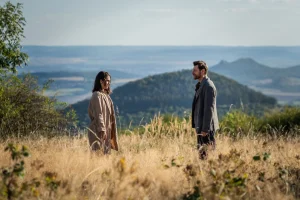
Oliver Záhlava’s widescreen cinematography nicely captures that culture, with a muted color palette and carefully composed landscapes that emphasize the physical relationship between the villagers and their surroundings without turning rural Slovakia into a picturesque postcard. Houses, fields, churches and muddy roads have weight here because we know they’re living on borrowed time.
Théophile Moussouni’s haunting original score is similarly restrained, adding an elegiac undercurrent without forcing emotion onto material that already carries plenty of it. Stick around through the closing credits, which incorporate documentary footage of the real evacuations and destruction of the villages alongside an evocative original song featuring vocals by Chripáková.
Flood‘s narrative may move too slowly for some viewers, and Mara’s coming-of-age trajectory contains few surprises. But the historical circumstances surrounding that familiar story give the movie an emotional resonance that gradually sneaks up on you. Mara spends much of the movie fighting to escape a world she believes is holding her back, only to discover that there’s a profound difference between choosing to leave your past behind and discovering that there may soon be nothing left to return to.