Václav Havel would have turned 90 on Oct. 5, and Prague cinemas are marking the anniversary with English-friendly screenings that offer strikingly different perspectives on the playwright, dissident and former Czech president.
The screenings span nearly two decades of filmmaking, from the extraordinary access of Citizen Havel to the final years documented in Havel Speaking, Can You Hear Me? and Leaving, the only feature Havel himself directed. Together, they also illustrate a relationship with cinema that ran considerably deeper than his occasional presence in front of a camera.
Film was woven into Havel’s family history long before he became a playwright or political figure. His grandfather Vácslav Havel built Prague’s Lucerna Palace, home to one of the city’s oldest cinemas; his father, Václav Maria Havel, developed the Barrandov neighborhood; and his uncle Miloš Havel became one of the most important figures in prewar Czechoslovak cinema, founding the film works at Barrandov.
From Havel’s plays to Havel on screen
Havel became internationally known through theater rather than cinema, but his absurdist writing proved adaptable to the screen. Film and television versions of his works appeared internationally even before the fall of communism, including adaptations of The Memorandum, The Increased Difficulty of Concentration, Audience, Protest, Mistake and Largo Desolato.
One of the most notable Czech feature adaptations arrived soon after the Velvet Revolution. Jiří Menzel directed The Beggar’s Opera in 1991 from Havel’s 1972 reworking of John Gay’s 18th-century play, with Josef Abrhám, Marián Labuda, Libuše Šafránková and Rudolf Hrušínský leading the cast and Jeremy Irons appearing in a small role.
Havel’s version, centered on manipulation, opportunism and the mechanics of power, had a particularly unusual history. It was performed without official permission in Horní Počernice in 1975 before finally receiving an official Prague staging under Menzel in 1990. Menzel brought it to cinemas the following year.
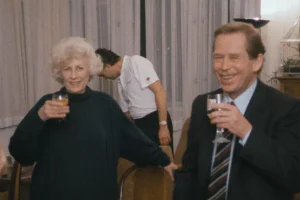
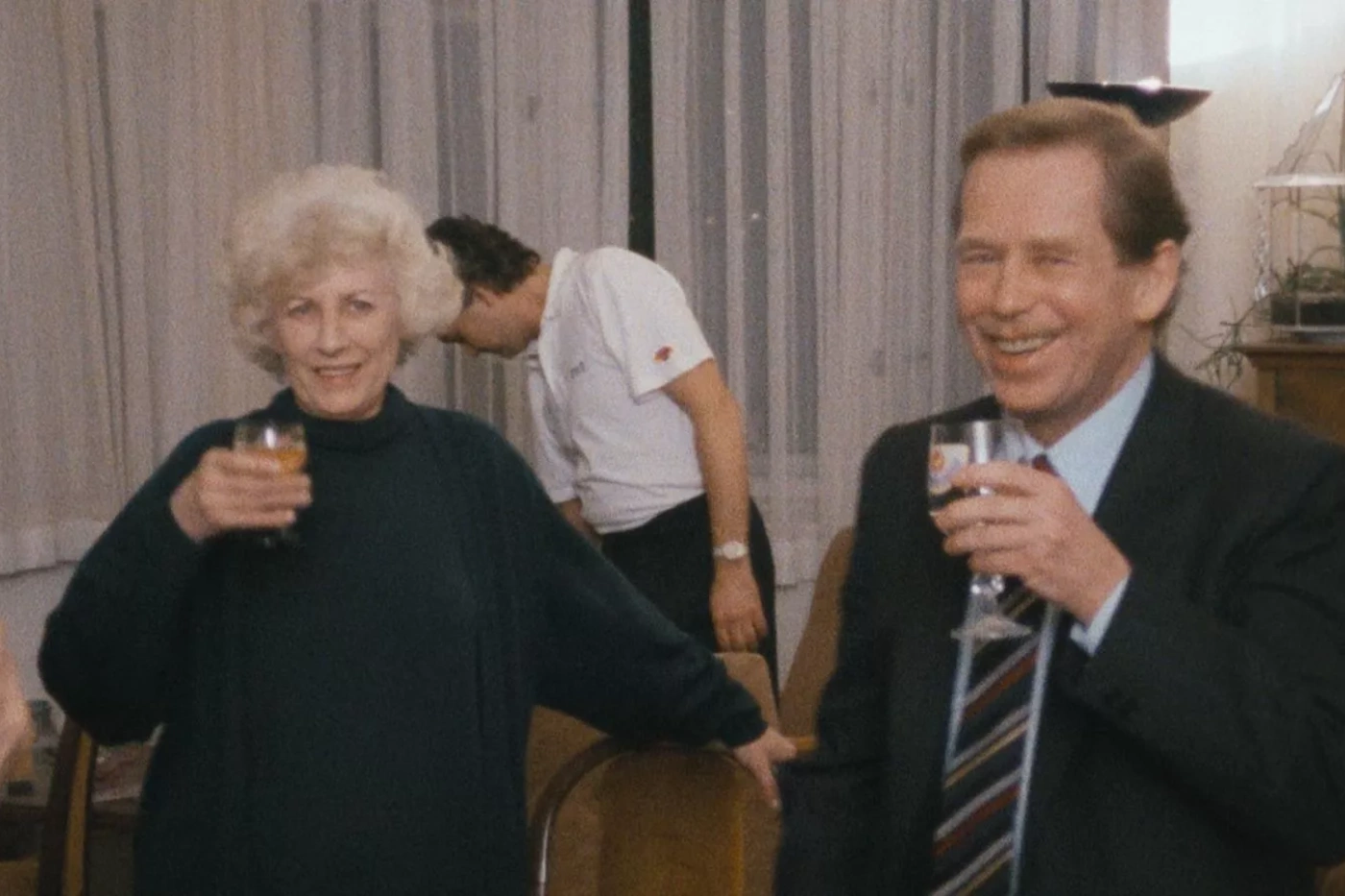
Pavel Koutecký began following Havel with a camera in 1992 and continued for more than 13 years, accumulating unusually intimate footage from his presidency. After Koutecký died in 2006, Miroslav Janek completed the project as Citizen Havel, released in 2008.
Rather than construct a conventional biography, the film observes Havel negotiating the strange mixture of ceremony, celebrity, bureaucracy and everyday inconvenience that accompanied the presidency. International statesmen and cultural figures pass through his orbit, but some of its most memorable sequences concern decidedly smaller matters.
The result strips away some of the monumentality that accumulated around Havel after the Velvet Revolution. The president seen here can be thoughtful and commanding but also anxious, amused, frustrated and occasionally overwhelmed by the rituals surrounding his office.
The Prague Reporter called Citizen Havel “a fascinating, revealing documentary” in its 2008 review, highlighting the remarkable degree of access granted to its filmmakers. The film screens with English subtitles at Bio Oko on Oct. 5 at 6 p.m.
Havel continued to attract documentary filmmakers after leaving Prague Castle. Andrea Sedláčková’s 2014 Václav Havel: Living in Freedom took a broader biographical approach, using Havel himself as a narrator while tracing his childhood, theatrical career, dissident years and political life. The Czech-French production was made with Czech Television and ARTE.
Miroslav Janek, meanwhile, returned to Havel’s world from a different perspective with the 2014 documentary Olga, a portrait of Havel’s first wife, Olga Havlová. Using archival footage, photographs and testimony from friends, the film depicts a figure whose own role in the dissident community and later Czech public life could easily be overshadowed by her husband’s. Olga won the Czech Lion for best documentary feature.
Havel himself eventually became the subject of a narrative feature. Slávek Horák‘s 2020 Havel stars Viktor Dvořák as the future president and focuses largely on the period from the Prague Spring through the Velvet Revolution, with Anna Geislerová as Olga and Martin Hofmann as actor and fellow dissident Pavel Landovský.
The continuing cinematic fascination with Havel is perhaps inevitable. Few modern political figures had lives that moved so dramatically between distinct worlds: privileged childhood and communist persecution, experimental theater and prison, underground culture and presidential ceremony.
Havel behind the camera
Havel’s relationship with filmmaking ultimately came full circle in the final year of his life. His play Leaving premiered in 2008, five years after he left the presidency. Its protagonist, former chancellor Vilém Rieger, must surrender his government villa and the privileges of office while attempting to maintain his dignity and relevance.
Havel subsequently adapted the play himself and, despite having never directed a feature, stepped behind the camera for Leaving. The 2011 production starred Josef Abrhám as Rieger alongside Dagmar Havlová, Vlasta Chramostová, Eva Holubová, Tatiana Dyková Vilhelmová and Jiří Lábus.
For Havel, directing a movie carried an additional historical resonance. The Czech Film Center noted at the time that his late move into filmmaking symbolically reconnected him with a family whose history was closely intertwined with the birth of the country’s film industry.
The film itself is unmistakably theatrical, but Havel embraces rather than disguises that artificiality. Political power, vanity, sexuality, language and self-delusion collide in an increasingly surreal environment as Rieger discovers that leaving office is not simply a matter of changing jobs.
The Prague Reporter called Leaving “a surprisingly refined piece of broad, intellectual surrealism.” Its title carries several meanings: departure from political office, disappearance from public consciousness and, given Havel’s declining health during production, the more fundamental question of what remains after a person is gone.
Havel died on Dec. 18, 2011, nine months after the film’s Czech theatrical premiere.
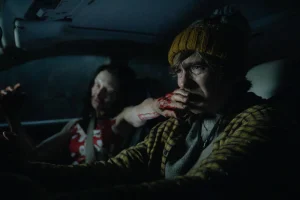
His final years are also the subject of Petr Jančárek’s Havel Speaking, Can You Hear Me?, assembled from more than 200 hours of footage shot during the last three years of Havel’s life. The documentary follows him after the presidency through meetings with friends and international figures, visits to Hrádeček and, significantly, the making of Leaving itself.
The film therefore provides something close to the reverse angle on Havel’s directorial debut: the filmmaker who had spent decades as the subject of other people’s cameras is seen attempting to command a film set himself.
Havel Speaking, Can You Hear Me? screens with English subtitles at Kino Atlas on Oct. 5 at 7 p.m. Jančárek will introduce the film, with a discussion following the screening.
Prague’s anniversary screenings conclude on Oct. 11 with Leaving at Kino Ponrepo. The National Film Archive will present Havel’s sole directorial feature from a 35mm print with English subtitles at 6 p.m. as part of its Václav Havel 90 program.
Seen together, the three films form an unusual portrait across time. Citizen Havel observes a man adapting to power; Havel Speaking, Can You Hear Me? finds him after relinquishing it; and Leaving allows Havel himself to transform that experience into fiction.