
The Peasants’ Revolt of 1381 comes to bloody life in The Uprising, opening in Prague cinemas this weekend after bowing stateside in September. This latest historical drama from writer-director Paul Greengrass (United 93, Captain Phillips) features impressive medieval production design, visceral battle sequences and an excellent ensemble cast, offering a compelling account of ordinary English citizens rising against an oppressive monarchy. Unfortunately, its central fictional protagonist, played by Andrew Garfield, feels increasingly out of place in this otherwise grounded historical drama, culminating in an almost embarrassing attempt to transform him into a legendary folk hero.
Set in an England still devastated by the Black Death, The Uprising follows a population struggling under the weight of relentless taxation, much of it imposed to finance the monarchy’s continuing war with France. The country is nominally ruled by 14-year-old King Richard II (Woody Norman), but real power rests with a council of aristocrats and church officials who have little interest in the suffering of ordinary citizens.
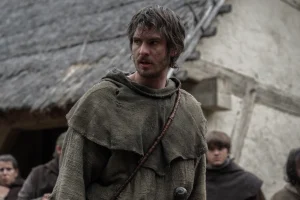
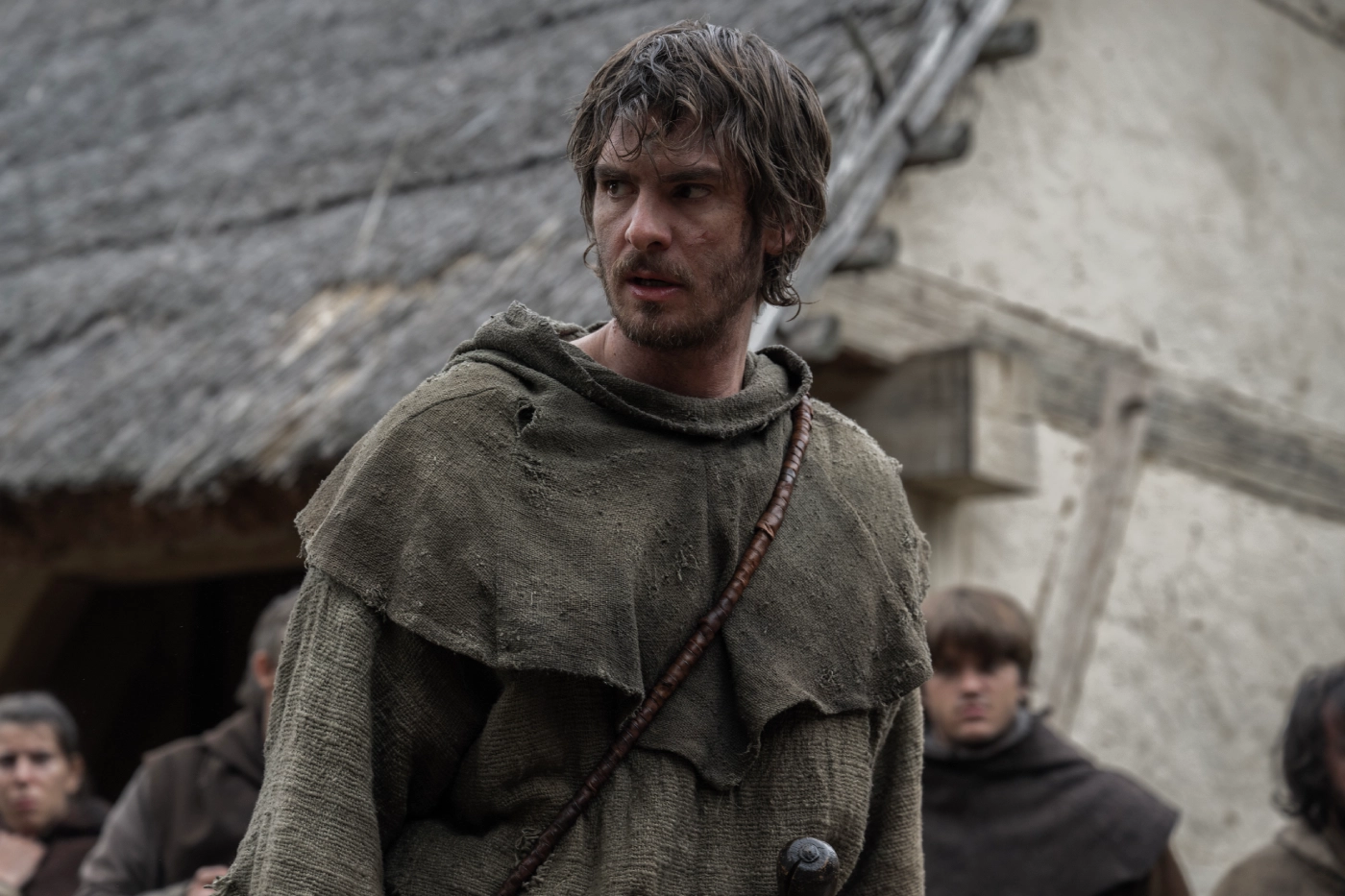
Among those citizens is a solitary farmer known as Ploughman (Garfield), whose wife and children have died in the plague. When another tax collector arrives demanding money he doesn’t have, and begins inspecting young girls to determine if they are of taxable age, the farmer’s simmering resentment erupts into violence, drawing him into a growing rebellion against the crown.
The uprising eventually brings together thousands of disaffected peasants under the leadership of radical priest John Ball (Jamie Bell) and former soldier Wat Tyler (Cosmo Jarvis), whose demands for freedom and economic justice threaten the foundations of England’s feudal society.
Greengrass approaches this material with the documentary-inspired immediacy that has characterized much of his career, employing handheld camerawork and rapid editing to immerse viewers in the confusion and brutality of medieval conflict. The result is often impressive, particularly during the film’s large-scale confrontations, which capture the terrifying disorder of poorly equipped civilians taking on professional soldiers.
But The Uprising is at its most fascinating not on the battlefield, but inside the royal court. Norman is a compelling presence as the young Richard II, a frightened, emotionally fragile boy haunted by nightmares and overwhelmed by responsibilities he can scarcely comprehend. He’s a king in name only, surrounded by powerful men who exploit his inexperience while assuring him that their decisions serve the interests of the crown.
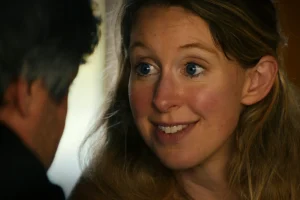
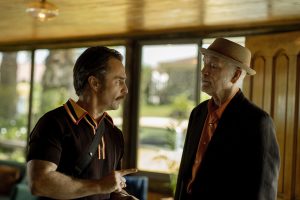
Katherine Waterston is his mother, Joan of Kent, whose concern for her son’s well-being is matched by her awareness of the dangerous political forces surrounding him. Stephen Dillane is Archbishop Simon Sudbury, while Tom Hollander brings a calculating menace to Treasurer Robert Hales. Together with the other members of Richard’s council, they manipulate the young king into imposing further taxes on an already desperate population.
The resulting political maneuvering recalls the best aspects of Game of Thrones, with competing interests, personal ambitions and institutional loyalties shaping decisions that will have devastating consequences for ordinary people. The difference, of course, is that these events unfolded against a genuine historical backdrop, giving the court intrigue an additional layer of fascination.
Greengrass may simplify some of the economic and political complexities surrounding the revolt, but he effectively illustrates how a government insulated from the consequences of its decisions can drive an entire population toward rebellion.
The insurgents themselves are similarly well portrayed. Bell gives John Ball the conviction of a religious radical who genuinely believes in the righteousness of his cause, while Jarvis makes Wat Tyler a formidable but imperfect leader whose military experience proves invaluable as the rebellion escalates.
Neither is presented as an uncomplicated hero. Their anger is justified, but their methods and ambitions carry dangers of their own, and the film is at its strongest when allowing these contradictions to emerge naturally. A movie centered on these characters and their journey would have been a satisfying one. Unfortunately, Garfield’s Ploughman has none of their complexities.
The character is conceived as an idealized representative of the suffering English peasantry: a hardworking man who has lost his family, his livelihood and ultimately his faith in the institutions governing his life. He’s sympathetic enough, and Garfield brings his customary intensity to the performance, but there’s remarkably little beneath the surface.
Unlike Richard, Ball or Tyler, the Ploughman has no meaningful contradictions or internal conflicts. He begins the film as a grieving, righteous farmer driven by anger at injustice, and he ends it as essentially the same man. His experiences don’t fundamentally change him, and his relationship with the rebellion rarely develops beyond the familiar trajectory of an ordinary man placed into extraordinary circumstances.
This is particularly frustrating because the historical figures surrounding him are so much more interesting. Greengrass has assembled an impressive cast to dramatize a genuinely fascinating event, only to devote much of the film’s attention to a fictional protagonist who adds little beyond conventional action-movie heroics.
During the climax, the Ploughman’s story takes an abrupt turn toward Robin Hood mythology. It’s a jarring development that feels less like an organic conclusion to the story than a studio-mandated attempt to establish a recognizable intellectual property; after spending two hours depicting the brutal realities of medieval oppression, The Uprising suddenly seems determined to become the origin story of a superhero.
The approach couldn’t be further removed from this year’s The Death of Robin Hood, which had flaws of its own but offered a far more satisfying attempt to ground the legendary figure in a recognizable historical reality.
Cinematographer Pål Ulvik Rokseth captures medieval England with a grimy authenticity, while the production design and costumes convincingly evoke a world of mud, poverty and institutional grandeur. The battle sequences are suitably brutal, with Greengrass placing viewers amid the chaos rather than presenting warfare as elegant spectacle.
Less successful are the sweeping, digitally enhanced aerial views of 14th-century London, which frequently resemble CGI establishing shots from a television production. Their artificiality contrasts awkwardly with the otherwise convincing physical environments.
The Uprising has far more going for it than against it. The political intrigue is engrossing, the historical conflict is vividly realized, and the supporting performances frequently elevate the material beyond the conventions of a medieval action movie. It’s just unfortunate that the film’s least interesting character occupies its center, and that his story ultimately distracts from the much richer drama unfolding around him.
Remove the Robin Hood mythology, and perhaps even the Ploughman himself, and The Uprising might have been an exceptional historical epic. As it stands, it’s a solid and frequently fascinating account of a genuine rebellion, undermined by an unnecessary attempt to manufacture legend from history.