Or, Robin Hood: Portrait of a Serial Killer. The legendary outlaw is deconstructed to the point of near-annihilation in The Death of Robin Hood, which bows in Prague cinemas this weekend after releasing stateside in June. This striking, brutal take on the iconic figure from writer-director Michael Sarnoski (Pig, A Quiet Place: Day One) benefits from a commanding performance by Hugh Jackman and beautiful filming across some stunning Irish locations, but its meditative, slow-burn nature after a riveting opening act is likely to put off some viewers.
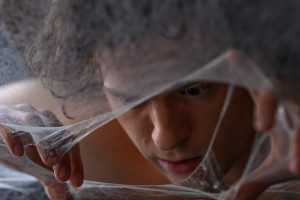
The Death of Robin Hood stars Jackman as a reimagined outlaw who more closely resembles a Western gunslinger than the English folk hero we’ve seen in countless films before. In this version, Robin is an aging murderer, haunted by the people he’s killed and the generations of relatives who have come looking for revenge. The film opens with him sheltering in a cave during a brutal winter, where he befriends a young drifter… only to kill her when she tries to murder him in her sleep.
Things only get more brutal from there. Robin’s old friend Little John (Bill Skarsgård) recruits him for one final adventure, a farmhouse siege that leaves a trail of dead bodies, including another child, and Robin himself badly wounded. The sequence is as shocking as anything in recent historical cinema, drenched in mud, blood and ruthless violence recalling the merciless world of Cormac McCarthy’s Blood Meridian. Consider this take on Robin Hood thoroughly deconstructed.
After that opening half-hour, however, The Death of Robin Hood essentially becomes a different movie. Little John brings the near-dead Robin to an island priory, where Sister Brigid (Jodie Comer) nurses him back to health. Robin spends much of the remaining film contemplating his violent past, philosophizing with a leper (Murray Bartlett) and gradually coming to terms with the possibility that death might be the only thing he has left to look forward to.
There are hints of a more conventional plot. Little John’s daughter Margaret (Faith Delaney) arrives on the island, while a young boy named Arthur (Noah Jupe) also shows up seeking revenge. Margaret, in particular, draws out a softer side of the former child-killer (explicitly recalling the relationship between Jackman and Dafne Keen in Logan), while Brigid offers him a vision of a life built around compassion rather than violence.
But these threads remain largely on simmer. Sarnoski is much more interested in the interior life of a man who has spent decades constructing a legend around himself and is now forced to confront what that legend actually concealed.
It’s a fascinating idea, even if the execution can become ponderous. The film recalls classic psychological Westerns such as 1950’s The Gunfighter, in which an aging outlaw played by Gregory Peck is forced to reckon with the reputation he has built while being pursued by the relatives of one of his victims. Sarnoski essentially transplants that structure into medieval England, while adding an extraordinary amount of graphic violence to what is otherwise a contemplative character study.
The result is something like The Northman crossed with a revisionist Western, but without the propulsive revenge narrative of either. Sarnoski is interested in what violence does to the person committing it, and how stories can transform violent men into heroes long after the victims have disappeared.
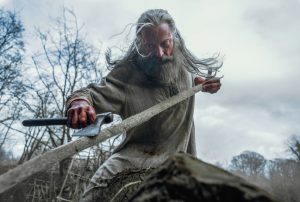
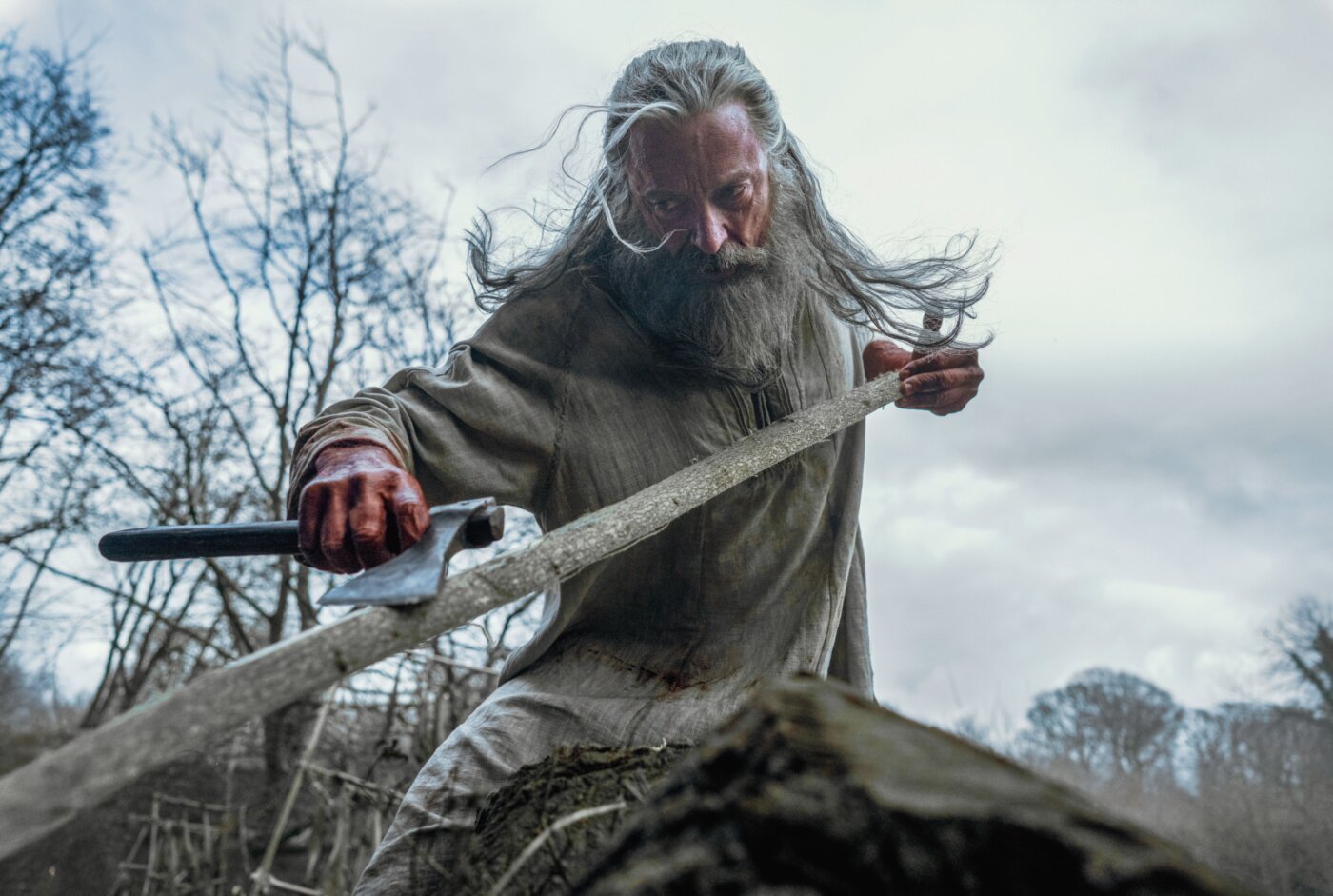
Beneath the enormous beard and weathered exterior, Jackman communicates Robin’s entire history with a glance. There’s still some of the gruffness of his Wolverine, but here it’s deployed in service of a man who has exhausted himself. Robin isn’t particularly likable, and the film doesn’t ask us to forgive him. Instead, Jackman makes us understand how a man who once embraced violence might eventually become sickened by the person he has made himself into.
Cinematographer Pat Scola shoots on 35mm, and the widescreen compositions give the film a tactile, almost painterly quality. The opening sequences are shrouded in gray skies, mud and darkness, while the priory provides a stark contrast of sunlight, stone and natural color.
The Northern Ireland locations are spectacular. Sarnoski repeatedly places Jackman against enormous landscapes, making Robin look tiny within the world he once supposedly conquered. Every frame feels carefully composed, and the film’s visual restraint makes its bursts of violence all the more startling.
That violence is exceptionally well staged. Arrows hit with a sickening thud, bodies collapse into mud and close-quarters fights have a physical brutality rarely seen in historical adventure movies. Sarnoski’s commitment to showing the consequences of violence rather than romanticizing it is one of the film’s greatest strengths.
After the gripping opening, however, spending the next 80 minutes with Robin recuperating on an island while he reflects on his sins is a considerable ask. Mainstream audiences expecting Robin Hood to mean sword fights, archery contests and merry adventures should be warned: this is emphatically not that movie. Even viewers willing to embrace the revisionist approach may find the final two acts overly dour.
Still, there’s something admirable about a major new film taking one of cinema’s most familiar heroes and asking whether he deserved to be a hero in the first place. Sarnoski doesn’t simply make Robin Hood darker for the sake of it; he strips away the mythology to examine the relationship between violence, storytelling and reputation. He’s more interested in examining how a monster became a legend, and whether that legend can ever be separated from the truth.
The Death of Robin Hood won’t be for everyone. Its opening act promises a brutal historical thriller before the film retreats into something much quieter and more philosophical, and that dramatic shift is likely to test the patience of some viewers. But the performances, cinematography and sheer ambition make it worthwhile, while Jackman delivers what might be a career-best performance. There may be no merriment in this version of Robin Hood, but there’s plenty to admire in Sarnoski’s beautifully realized vision.