A combat veteran suffering from PTSD, and his human companion, take a flight to the Alaskan wilderness that turns into a fight for survival in Heart of the Beast, now playing in Prague and cinemas worldwide. This hardened, effective drama packs an undeniable emotional punch, even if the procedural survival elements aren’t as well-depicted as the best of the genre, and the use of CGI animals contrasts sharply with the film’s finest attribute.
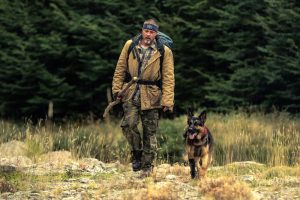
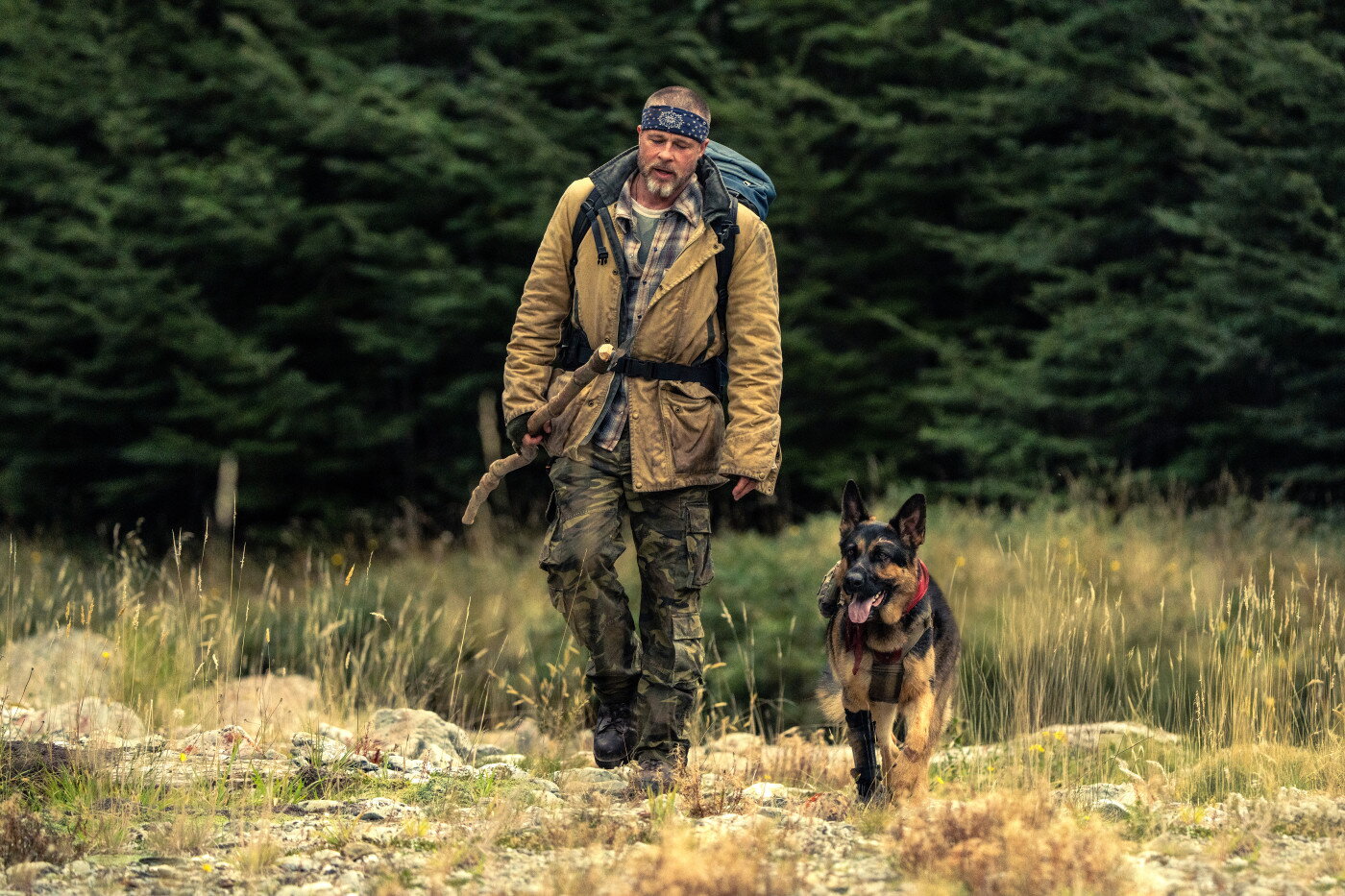
That would be Uber, a real-life German Shepherd and mountain search-and-rescue dog who reportedly washed out of police academy training for being too gentle. Uber (alongside three canine stand-ins) plays Odin, a retired combat dog who has served alongside Special Forces officer James Belmont (Brad Pitt) and carries the scars to prove it: titanium teeth, a prosthetic leg and lingering trauma from years spent in war zones. One of the most remarkable animal performances in recent memory, Uber offers the most effective performance in Heart of the Beast.
But Pitt isn’t bad, either. Reuniting with Fury director David Ayer, he plays James as a man who has returned from war without ever entirely leaving it behind. After three decades of military service, James lives largely in isolation, with Odin providing his closest — and perhaps only — meaningful relationship. A camping and fishing trip into the Alaskan wilderness seems like exactly the kind of solitude both of them need.
For a while, Heart of the Beast is content to let us enjoy it with them. James pilots his small plane across spectacular mountain ranges before he and Odin settle beside the water, catch fish, build a fire and briefly share their campsite with a passing stranger (J.K. Simmons). There’s an appealing tranquility to these early scenes, beautifully photographed against vast wilderness that makes civilization seem impossibly distant.
That becomes a problem when the return flight goes catastrophically wrong, leaving James and Odin stranded roughly 60 miles from the nearest road. With limited supplies and no means of calling for help, their only option is to start walking. From there, Cameron Alexander‘s screenplay settles into familiar wilderness-survival territory. James and Odin encounter a grizzly bear, a pack of wolves, dangerous rapids and a precarious crossing over a river, while injuries accumulate and their chances of reaching civilization steadily diminish.
Ayer stages these sequences with considerable skill, but Heart of the Beast never quite reaches the procedural heights of something like J.C. Chandor‘s All Is Lost, where every new problem seemed to grow organically from the protagonist’s circumstances and previous attempts at survival. Here, there’s occasionally a “this happens, then this happens” quality to the journey: the destination is the road, and the screenplay places a succession of unfortunate events in the way.
That episodic construction prevents some individual dangers from carrying the weight they might have, but it doesn’t seriously undermine the film because the survival story isn’t really what Heart of the Beast is about. The movie’s emotional investment is in the relationship between James and Odin, two soldiers who have returned from combat carrying different versions of the same damage.
James’ isolation initially looks like peace. He knows the wilderness, appears comfortable with silence and has none of the obvious volatility often used as shorthand for traumatized veterans. But Ayer gradually reveals that withdrawing from the world isn’t the same thing as recovering from what happened in it. James may have left the battlefield behind geographically, but he has built a life around avoiding almost everything except the one companion who understands where he has been.
Odin makes that idea literal. His prosthetic leg and titanium teeth turn his military history into something physically attached to him, while nightmares suggest wounds that aren’t visible. In one of the movie’s most affecting quiet moments, James removes Odin’s prosthesis and massages the remaining stump. There’s nothing sentimental about the scene, but the familiarity of the gesture says everything about their relationship: each understands the other’s pain because they endured much of it together.
That bond gives the later survival sequences their emotional power. James isn’t simply trying to get himself back to civilization, nor is Odin merely a loyal dog following his owner home. Again and again, each places himself in danger for the other, and the possibility of losing that relationship becomes considerably more frightening than anything the wilderness can throw at them.
Pitt is particularly good at keeping James’ emotions contained. It’s a physical performance built around endurance rather than heroics; James knows what he’s doing, but accumulating injuries and exhaustion steadily strip away his capabilities. Pitt never turns him into an indestructible hero, and his most affecting moments come when that hardened exterior finally cracks.
But Uber is remarkable. Whatever combination of training, editing and good fortune went into the performance, Odin registers as a genuine character rather than a movie animal waiting for commands just outside the frame. His attentiveness to his master, moments of exhaustion and hesitation, and simple physical presence give their relationship a tactile authenticity that no amount of digital wizardry could manufacture.
Unfortunately, Heart of the Beast repeatedly provides the comparison. The grizzly bear and wolves James and Odin encounter are digital creations, and while the effects are technically accomplished, they produce an unavoidable uncanny-valley effect alongside Uber. It’s not simply that the CGI animals occasionally look artificial; it’s that the film has already demonstrated how extraordinarily expressive a real animal can be.
Imagine an otherwise grounded drama in which our human protagonist suddenly encounters a threatening stranger who is entirely computer-generated. Even superb visual effects would call attention to the construction of the scene. Something similar happens here: Uber’s natural movements and reactions have so much weight that the digital creatures threatening him can feel strangely insubstantial by comparison.
It’s an unfortunate limitation in a movie whose greatest strength is authenticity. Still, Ayer keeps the encounters tense, and the surrounding wilderness is spectacularly photographed. Though the Alaskan setting was largely recreated in New Zealand, the mountains, forests, rivers and enormous stretches of empty terrain provide the film with an appropriately imposing backdrop, emphasizing how insignificant James and Odin are against the landscape they’re attempting to cross.
Heart of the Beast may stumble when its wilderness adventure becomes a procession of hazards, and its digital wildlife can’t compete with the real thing standing beside Pitt. But whenever Ayer turns his attention back to James and Odin, the movie finds something genuinely moving. Pitt gives one of his most restrained performances in recent years, but it’s Uber—gentle, wounded, loyal and astonishingly expressive—who gives this survival drama its heart.