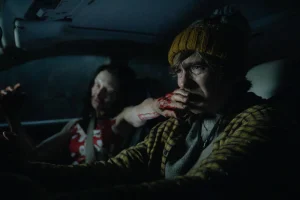
A well-meaning dad sneaks his 13-year-old son into a hip-hop music festival, only to lose him in the crowd, in Rolling Loud: The Movie, opening in Prague cinemas this weekend after debuting stateside last week. This middling comedy benefits from an appealing performance by Owen Wilson in the lead but fails to generate many laughs—nor does it capitalize on being set at the titular festival, which is surprising given that promoter Live Nation is among the film’s producers.
Wilson stars as Hank Goldstone, a suburban furniture salesman whose teenage son Xion (Christian Convery) desperately wants to attend Rolling Loud, the popular hip-hop festival featuring some of the biggest names in rap. Hank and his wife Melanie (Jolene Blalock) have agreed that Xion is too young, but Hank sees an opportunity to score some parenting points by secretly taking his son to the festival instead of their planned weekend at the lake.
It’s a questionable decision, but one that comes from a genuinely affectionate place. Hank wants to connect with his son, and Wilson’s familiar laid-back charm makes him an immediately sympathetic figure despite his poor judgment. Unfortunately, shortly after they arrive, Xion disappears into the crowd, leaving Hank to navigate the festival’s security, drug culture and assorted eccentric personalities in a desperate attempt to find him before his wife discovers what’s happened.
Along for the ride is Terry (Matt Rife), Hank’s younger co-worker, whom he’s supposed to fire on orders from their boss (Henry Winkler). The pair eventually enlist the help of festival volunteer Linda (Christine Ko), and the search becomes an increasingly chaotic series of misadventures involving security guards, a Ferris wheel, accidental drug consumption and some extremely public embarrassment.
There’s a workable comedy buried in this premise, particularly in the contrast between Hank’s earnest, middle-aged dad energy and the youthful excess surrounding him. Wilson is certainly game, throwing himself into the proceedings with the same goofy sincerity that has made him such an appealing screen presence for decades.
Hank may be irresponsible, but Wilson never makes him seem uncaring. His attempts to be the cool dad are endearingly misguided, and his relationship with Xion provides the movie with its few genuinely warm moments. Convery is also appealing as a teenager who understands his father is making a terrible decision but can’t quite believe his luck. Their early scenes together establish a nice camaraderie, and it’s easy to understand why Hank would risk his wife’s wrath to give his son an unforgettable experience.
Unfortunately, Rolling Loud: The Movie struggles whenever Wilson isn’t carrying the proceedings. Writer-director Jeremy Garelick (The Wedding Ringer, Murder Mystery 2) assembles a series of increasingly frantic comic set pieces, but precious few of them generate the laughs they’re clearly designed to produce. The film is surprisingly mild for an R-rated comedy set at a music festival, and its attempts at outrageous behavior rarely go beyond the familiar territory of a dad getting accidentally high or making a fool of himself in public.
Rife provides some fleeting amusement as Hank’s less-than-reliable companion, while Ko gets several of the movie’s biggest laughs as the helpful but unpredictable Linda. One particularly outrageous gag involving graphic nudity comes as a genuine shock in a film that otherwise feels suitable for younger audiences. Credit to Ko for enthusiastically committing to a bit that briefly delivers the kind of outrageous comedy the rest of the movie seems reluctant to attempt.
Blalock, meanwhile, feels as though she’s wandered in from an entirely different production. Her Melanie has zero chemistry with Wilson’s Hank, and their scenes together resemble a particularly unpleasant episode of The Real Housewives more than a believable marriage. By sheer coincidence, Blalock happens to be married to Michael Rapino, the president and CEO of Live Nation, which is among the film’s producers.
For a comedy built around one of the world’s largest hip-hop festivals, there’s a remarkable shortage of music. Sexyy Red gets a brief on-stage performance, and several other artists make appearances, but the movie rarely captures the energy of a major live concert or the appeal of the festival experience. Instead, Rolling Loud largely functions as a crowded backdrop for Wilson’s misadventures, interchangeable with almost any other large public gathering.
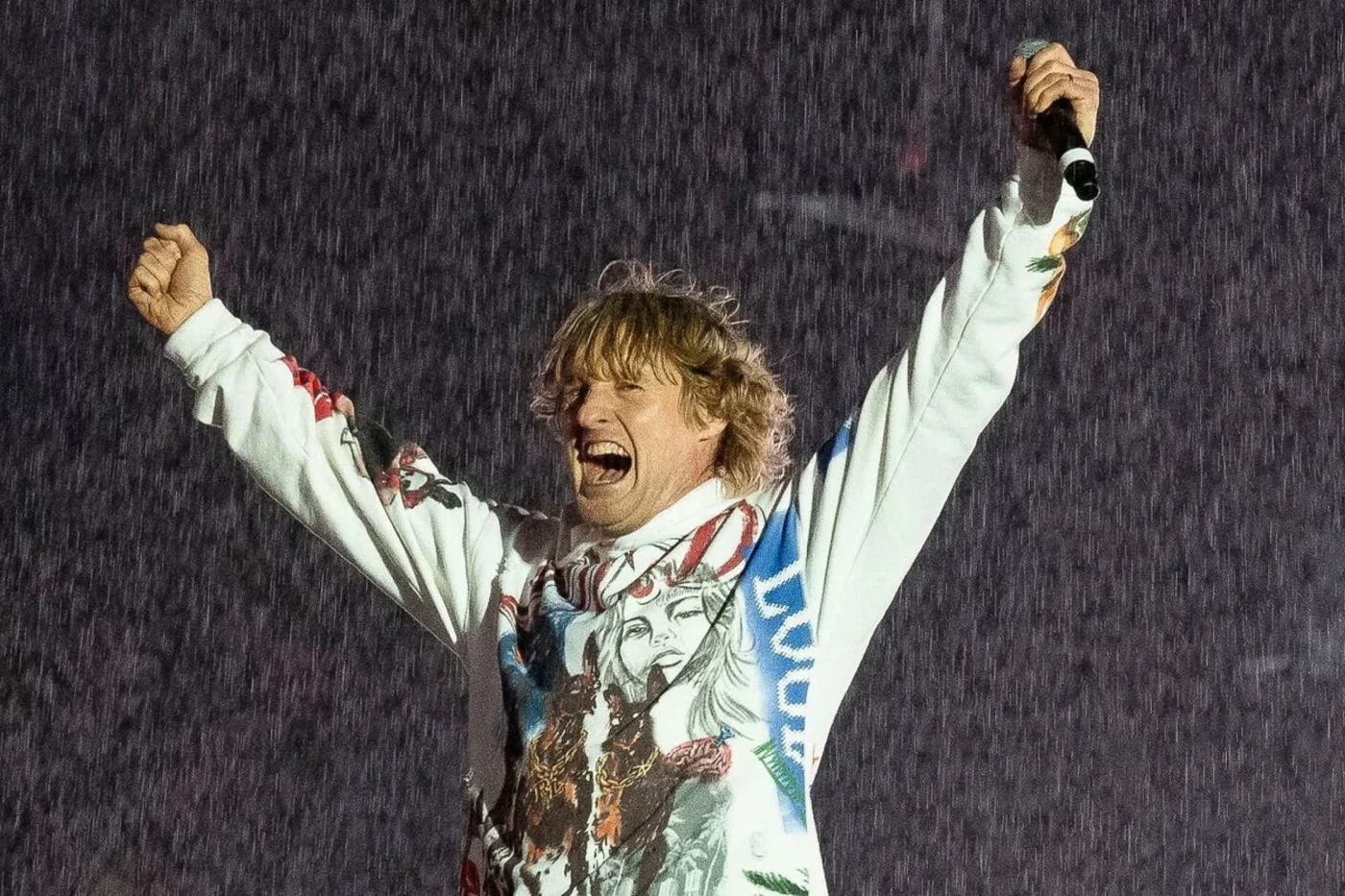
Travis Scott receives prominent billing on the poster, but his contribution amounts to a single scene in which he mumbles from an armchair. The film’s climactic musical showcase, meanwhile, belongs not to Scott but to Wilson, who takes the stage to perform Scott’s hit FE!N before an improbably enthusiastic crowd. The audience paying to see this movie may be less enthused.
The missed opportunity to showcase Rolling Loud is especially baffling given Live Nation’s involvement. If the goal was to promote the festival, the company might have been better served by financing a documentary capturing an actual edition of Rolling Loud, or at least incorporating substantial concert footage into a fictional comedy. The movie has access to the performers, the crowds and the atmosphere, but makes surprisingly little use of any of them.
Instead, Rolling Loud: The Movie feels like a generic misadventure comedy that happens to have secured an unusually expensive location. We learn little about what makes Rolling Loud distinctive, and the film never develops the kind of infectious musical energy that might compensate for its weak jokes.
Wilson remains an agreeable presence throughout, and there’s something undeniably sweet about Hank’s determination to give his son a memorable experience, even as his parenting decisions grow increasingly indefensible. But Rolling Loud: The Movie never becomes the wild, music-fueled comedy its premise promises. It’s too tame to work as a genuinely outrageous festival romp, too short on laughs to succeed as straightforward slapstick, and too uninterested in its titular attraction to function as an effective showcase for Rolling Loud itself.
There’s little here that couldn’t have been accomplished with a fictional music festival, a handful of extras and a considerably smaller production budget. For a movie named after an event renowned for its volume and energy, Rolling Loud: The Movie is surprisingly quiet.