Prince Adam returns to Eternia to save his home world from the evil clutches of the Skeletor in Masters of the Universe, opening this weekend in Prague (in Czech-dubbed and original English-language versions) and cinemas worldwide. This goofball update of the Mattel toy line that was promoted by a 1980s Saturday morning cartoon and other various iterations from director Travis Knight (Bumblebee) hits just the right balance of action and humor, and is at least initially endearing—but a complete void of story or character development turns the second half of this overlong blockbuster into an endurance test.
What is Eternia? Why does Skeletor want to rule it? There’s the potential, even here, for some Game of Thrones-like political intrigue to establish the stakes of this world, but Masters of the Universe is not interested in such nuance. After an engaging 10-minute setup that recalls last year’s How to Train Your Dragon, Skeletor (Jared Leto) and his evil army quickly invade Castle Grayskull, to the chagrin of King Randor (James Purefoy) and Queen Marlena (Charlotte Riley), who send their young son Adam across dimensions to Earth, with instructions to use his magic sword to return at an unspecified later date.
Will Adam get back to Eternia and save his home planet? Stick around another 130 minutes to find out, but the screenplay, credited to Chris Butler, Aaron Nee, Adam Nee, and Dave Callaham, gives us precious little reason to care either way.
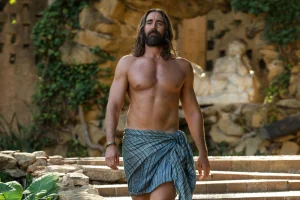
Instead, Masters of the Universe is at its best during an engaging first act in Oklahoma City, where a now-adult Adam (Nicholas Galitzine) is still struggling to adapt to life on Earth; he lost his magic sword when he first arrived 15 years ago. Now, he struggles to explain his complex backstory to dates, clashes with the HR manager (Sasheer Zamata) at his office job, and forever yearns to fulfill his destiny, which he can only do if he finds that darn sword.
These fish-out-of-water scenes are breezy and fun, and they’re complemented by some more fish-out-of-water scenes when the Americanized Adam finally makes it back to Eternia and butts heads with Ram Man (Jon Xue Zhang), Fisto (Jóhannes Haukur Jóhannesson), Mekaneck (James Wilkinson) and other colorful action figures. The movie has an ingenious explanation for all the childish names from the toy line: the young Adam named them all retroactively from his memory of their character traits.
But these characters are colorful in appearance only: there’s nothing interesting about them on any deeper level. That extends to villains Skeletor, Evil-Lyn (Alison Brie), and Trapjaw (Sam C. Wilson), who each steal their scenes but lack any kind of motivation beyond being evil. The film’s female lead, Teela (Camila Mendes), is similarly left devoid of any kind of personal agency beyond fighting the bad guys.
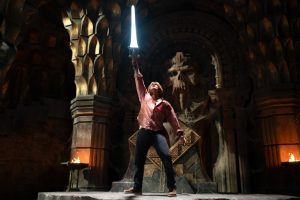
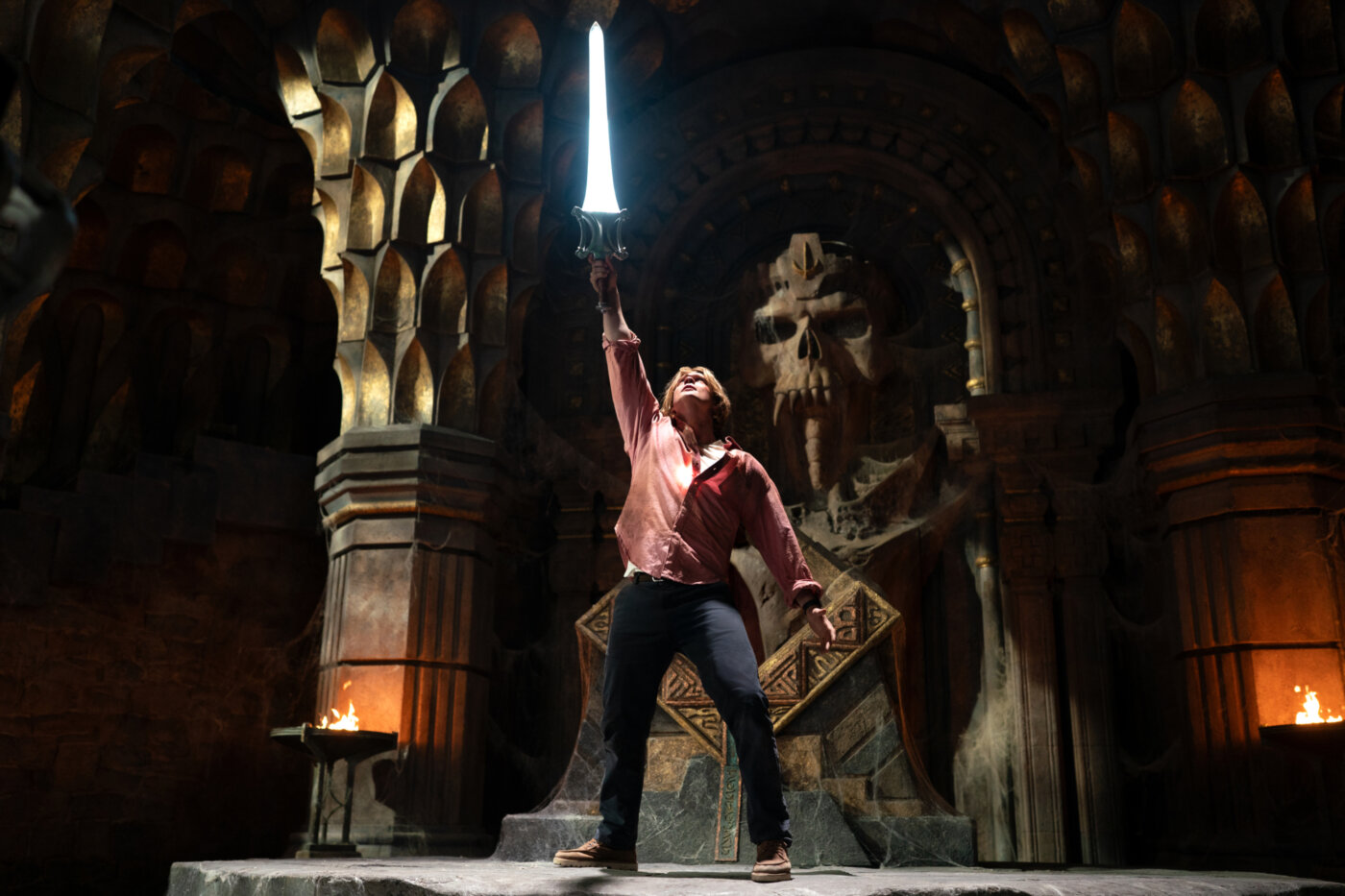
Even Adam himself lacks any kind of character arc: he just lifts his sword and says ‘I have the power’ to become the invincible He-Man, rather than go through any internal change. It’s like if Luke Skywalker, instead of training with Obi-Wan and Yoda across multiple films, just thrust forth his lightsaber and proclaimed himself a master Jedi. Precisely one character has anything resembling an arc here: Man-at-Arms (Idris Elba), who becomes a drunk after failing to protect Grayskull, only to redeem himself in the final battle.
Masters of the Universe follows in the footsteps of this year’s The Super Mario Galaxy Movie and Mortal Kombat II, blockbuster sequels that abandoned traditional storytelling in favor of fan service. The film is stuffed to the brim with characters, creatures, weapons, vehicles, and catchphrases lifted directly from the toy aisle, gives Dolph Lundgren a brief cameo, and even invokes 4 Non Blondes What’s Up from the beloved internet meme. For longtime fans, there may be some pleasure in seeing this world brought to life with such enthusiasm, but there’s little depth to win over anyone else.
When the story grinds to a halt, the action takes over. Knight stages several competent John Wick-style fight sequences filled with bone-crunching impacts and surprisingly brutal violence. It’s an odd fit for a property that was originally designed to sell toys to young children, but the filmmakers seem well aware that the core audience today consists largely of adults who grew up with the franchise.
Buried beneath layers of makeup and digital effects, Leto’s Skeletor emerges as the film’s most engaging presence. Channeling Frank Langella‘s gloriously theatrical performance from the 1987 Cannon movie, the actor delivers every line with campy enthusiasm and just enough menace to remain entertaining. The screenplay seems to recognize this, repeatedly giving Skeletor the most memorable scenes; a climactic montage that has Skeletor confronting Adam on Earth is a comedic highlight.
The technical package is similarly impressive. Guy Hendrix Dyas’ production design embraces the franchise’s inherent absurdity with bright castles, oversized weapons, and lavish fantasy environments that often resemble expensive toy displays brought to life. Cinematographer Fabian Wagner captures Eternia in vivid widescreen compositions bursting with color, a welcome contrast to the murky visual palettes that dominate many contemporary blockbusters, including the recent The Mandalorian and Grogu.
Daniel Pemberton’s original score is another standout. While other blockbuster franchises, such as Marvel, have struggled to establish memorable fresh musical identities, Masters of the Universe arrives with an exhilarating fantasy theme that blends medieval instrumentation with modern blockbuster energy, giving even the weakest scenes a sense of momentum and grandeur. An acoustic rendition of The Cure’s Boys Don’t Cry also lands well during one of the film’s emotional beats.
Masters of the Universe is at its best when it embraces the inherent silliness of its premise and allows talented performers to have fun inside its colorful sandbox. Galitzine makes for an appealing He-Man, Leto chews scenery with gusto, and Knight delivers a visually vibrant fantasy adventure. But beneath the spectacular costumes, elaborate world-building, and endless fan service lies a surprising emptiness. By the time He-Man finally raises his sword and claims the power, you may find yourself wishing the screenplay had discovered some of its own.