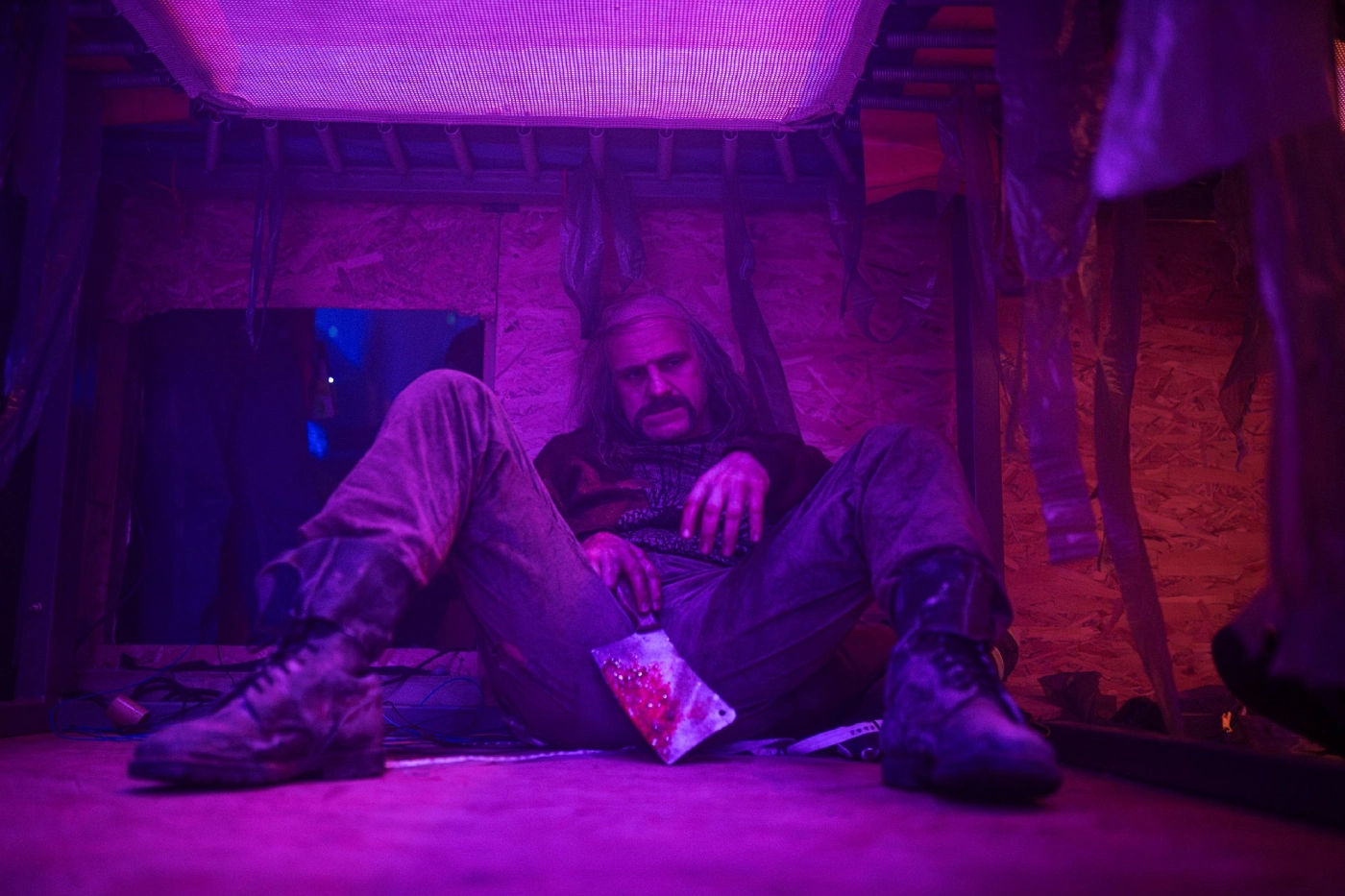
A group of international students are killed off one by one in the chambers of a Prague escape game in Thankskilling Day (titled Red Escape for international release), a new (mostly) English-language Czech horror film now playing in local cinemas after wrapping production in the city early last year. This charming pastiche of 1980s slasher movies is awful in all the right ways, and the decision by filmmakers Petr Kubík and JC Kovář to approach it with a completely straight face gives it some real character. A heavy dose of local lore, contrasted with a completely arbitrary choice of American holiday, adds to the fun for Prague audiences.
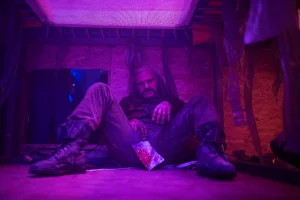
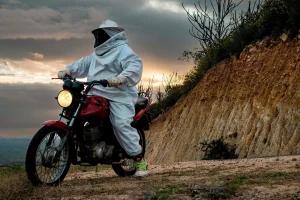
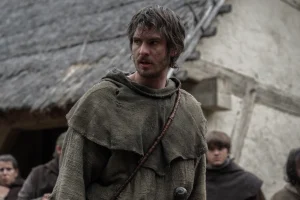
While Americans were stuffing their faces with turkey and mashed potatoes over Thanksgiving, it was a different scene in communist Czechoslovakia, where poor young Klement (played as an adult with drooling menace by Jan Jackuliak) was locked in the basement of Prague’s ČKD factory complex in Vysočany. Due to his father’s transgressions, Soviet mad scientists forced him to murder—first animals, then people—exactly once a year, in an experiment designed to see if they could manufacture a serial killer. Success!
Now, Klement stalks the halls of the former Prague factory, which until earlier this year housed the real-life Futurento escape game, emerging every Thanksgiving to murder unsuspecting tourists. One wonders what the rest of his year is like, and what kind of living arrangement he’s worked out with the proprietors. Maybe that’s why it closed down earlier this summer.
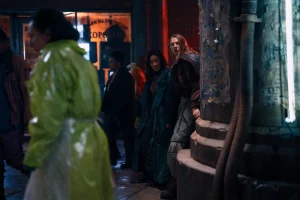
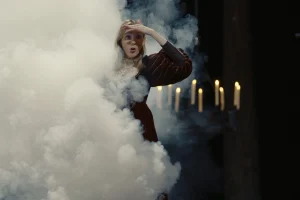
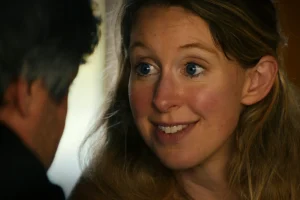
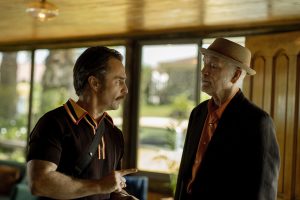
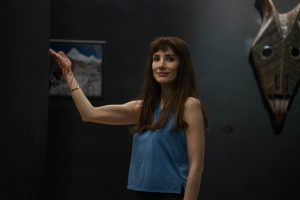
Despite plentiful news reports of American tourists going missing in Prague every Thanksgiving, a group of young friends—Americans Amy (a standout Jana Findlay) and Ben (Darren Jenkins-Johnston), Polish Sara (Sára Korbelová), Italian Toni (Fabio Morelli), and Czech couple Mark (Tomáš Weber) and Niky (Aneta Kernová)—find themselves at the Futurento complex this Thanksgiving, where the expected unfolds. As expected.
Thankskilling Day is a classic, low-budget, guerrilla-style slasher movie, and there’s something almost refreshing about its degree of amateurishness in 2026. Shot almost entirely within the confines of the actual escape game, the movie features some wonderfully ineffectual cutaways to a Vysočany Christmas market that remains tantalizingly out of reach of our protagonists behind locked doors. Salvation, or at least a cup of mulled wine, is mere meters away.
The filmmakers haven’t exactly splurged on the splatter, either. There’s only one substantial gore effects shot in the entire movie, an early throat-slashing that promises considerably more carnage than the production can afford to deliver.
But the characters behave with all the confounding stupidity of their 1980s counterparts. Even after establishing that they’re being stalked by a homicidal maniac, they insist on splitting up to explore unfamiliar corridors and spend an extraordinary amount of their remaining time on Earth bickering with one another.
Part of the fun is trying to establish who these people actually are. We’re introduced to the group already assembled at the escape game, and the screenplay by Kovář withholds basic information about their relationships as though it were setting up some earth-shattering third-act revelation. The Polish and American girls keep referring to themselves as sisters, but that can’t be right, can it? And how do any of these people know each other? By the time some of these questions are answered, we’re mostly rooting for Klement.
Yes, we’re in classic slasher territory here. But where most contemporary filmmakers would approach this material with self-referential humor and knowing winks to the audience (see: Kořenový vězeň), Kubík and Kovář play it entirely straight. Nobody seems aware they’re in a terrible horror movie, which is precisely what makes it so entertaining. A bad movie is never fun if the filmmakers are in on the joke.
The approach recalls the Bulgarian-shot Search and Destroy, which recreated the distinctly dubious pleasures of 1980s B-grade action cinema with a similarly admirable degree of self-seriousness. To what end, one might reasonably ask? Both films have set themselves an exceptionally low bar, but there’s something to be said for clearing it with such authenticity.
The one element that breaks the spell in Thankskilling Day is the brief and unnecessary use of generative AI imagery during some of the communist-era flashbacks. In a movie whose appeal largely derives from its handmade, old-fashioned qualities, the intrusion of distinctly modern technology feels particularly antithetical to what the filmmakers have otherwise achieved.
Those communist-era sequences are, however, among the movie’s most interesting elements. Kubík told CzechCrunch that the filmmakers expanded Klement’s backstory following positive reactions at test screenings, and the Czechoslovak setting reportedly helped attract the attention of American distributor SP Releasing, part of producer Steven Paul’s SP Media Group.
Made for just under CZK 20 million (less than $1 million), Thankskilling Day is expected to reach hundreds of American cinemas under the considerably less amusing title Red Escape. It has already picked up a best slasher award at the Bloody Mirror horror festival in Tbilisi, Georgia. For a domestic production working in a genre rarely tackled by Czech filmmakers, that’s no small achievement: this low-budget indie will likely reach a wider audience than most films submitted by Czechia to the Academy Awards.
Whether the movie’s particular brand of entertainment resonates with audiences will depend on their affection for the kind of disreputable horror films that once populated the bottom shelves of video rental stores. But there are some genuine laughs to be had here, even if most of them come at the movie’s expense.
Thankskilling Day is a turkey, all right, but an appropriately seasonal one. And for Prague residents who have ever wondered what might be lurking beneath the city’s rapidly disappearing industrial architecture, here’s one wonderfully ridiculous answer.