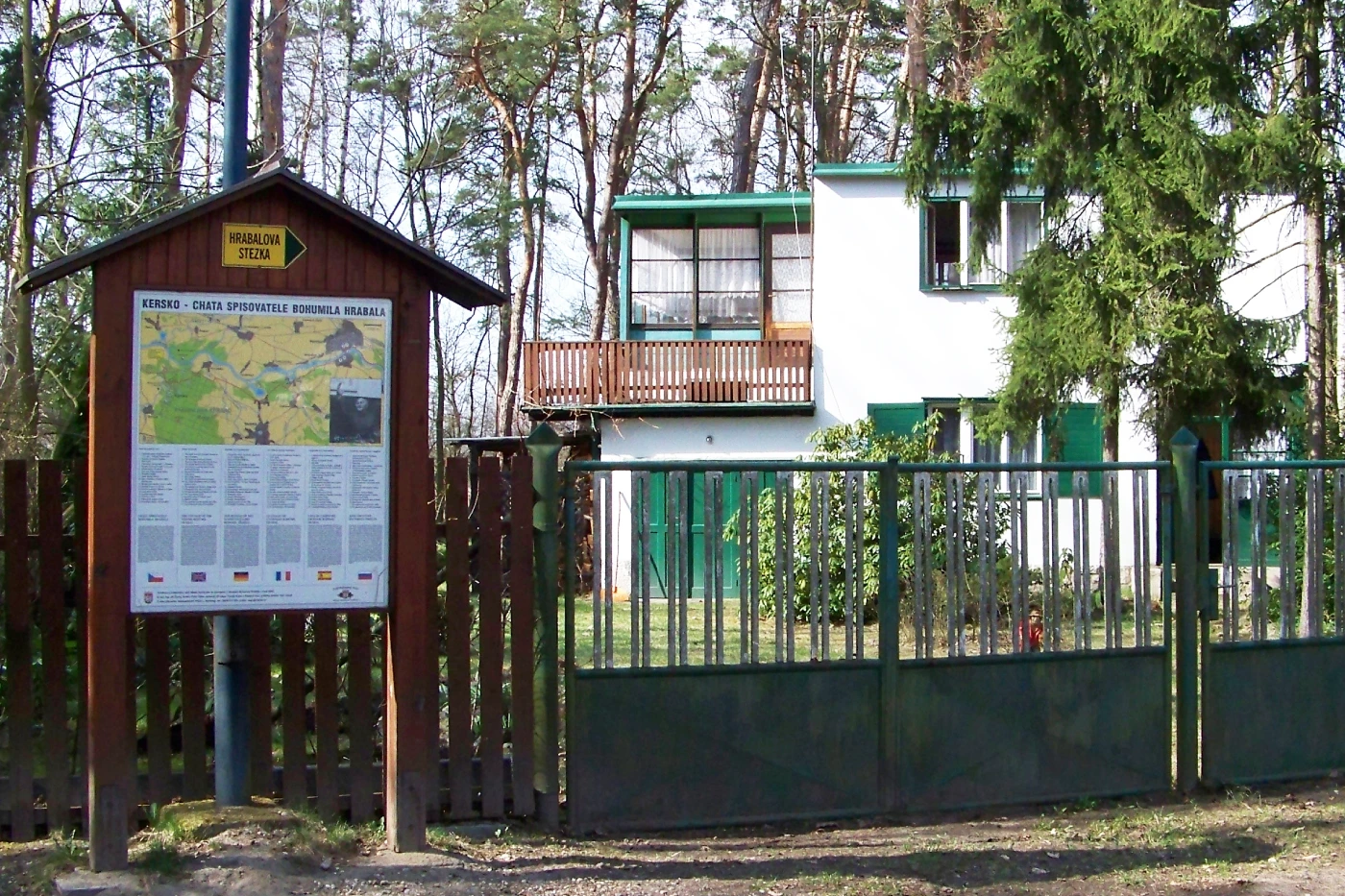
The cottage of Czech writer Bohumil Hrabal in the village of Kersko, northeast of Prague, has been declared a national cultural monument by the Ministry of Culture, recognizing the site’s importance to Czech literary and cultural history. The modest house, where the author spent decades writing and retreating from city life, is closely tied to some of the most influential works of 20th-century Czech literature and film.
Owned by the Central Bohemian Region and managed by the Polabí Museum, the cottage was renovated and reopened to the public in 2024 as a small museum dedicated to Hrabal’s life and work. The decision to grant it protected status aims to preserve the building and its atmosphere for future generations.
The designation also highlights the broader cultural impact of Hrabal’s writing, which has inspired some of the most celebrated films in Czech cinema, particularly through adaptations by Oscar-winning director Jiří Menzel.
Hrabal’s cottage in Kersko
Hrabal bought the small cottage in Kersko in 1965 and spent many summers there writing and hosting friends. Located in a quiet settlement surrounded by pine and birch forests along the Elbe River, the house became both a creative refuge and a recurring setting in his literary world.
Regional officials requested the cultural monument designation after purchasing the property from private owners in 2021. Following renovations, the site was restored to evoke the period when Hrabal lived there, with furnishings and objects reflecting his daily life.
“Hrabal’s cottage has exceptional cultural and historical value. It is a unique testimony to the life and work of a world-renowned writer,” Central Bohemian regional councillor Václav Švenda said in a statement announcing the designation.
Today, the house functions as a small museum intended to feel as if the writer had just stepped out. According to the Polabí Museum, many of the furnishings and artifacts inside the cottage are original items that Hrabal used during his time in Kersko.
The property first opened to visitors in May 2024 and is accessible through guided tours with limited group sizes. Visitors can typically explore the cottage from Friday to Sunday during the spring and autumn seasons, with daily opening hours in the summer months.
Local officials say the cultural monument designation provides additional legal protection for the building while reinforcing its role as a site connected to both Czech literary history and the country’s broader cultural heritage.
The surrounding landscape itself also played a central role in Hrabal’s writing, becoming the setting for several of his stories. That connection between place and storytelling would later extend beyond literature and into Czech cinema.
From Hrabal’s prose to the Czech New Wave
Hrabal’s work has been one of the most important literary sources for Czech filmmakers, particularly during the Czechoslovak New Wave of the 1960s. His stories, often rooted in everyday conversations, pub anecdotes, and the lives of ordinary people, offered directors a distinctive way to explore history indirectly.
Instead of focusing on heroic narratives or overt political commentary, Hrabal’s writing captured the absurdities and compromises of daily life under shifting political systems. That perspective proved especially valuable for filmmakers working in periods when historical interpretation was politically sensitive or restricted.
The director most closely associated with translating Hrabal’s prose to film was Jiří Menzel, whose adaptations remain central to Czech cinema. His 1966 film Closely Watched Trains, based on Hrabal’s novella set during the Nazi occupation, won the Academy Award for best foreign-language film in 1968 and became one of the most internationally recognized Czech movies.
Menzel continued to adapt Hrabal’s work across several decades, including Larks on a String, completed in 1969 but banned until the end of the communist period, and I Served the King of England, released in 2006. These films depict historical upheaval through personal stories and irony rather than direct political dramatization.
Among the Menzel adaptations most closely tied to Kersko itself is The Snowdrop Festival (1983), a tragicomic portrait of village life based on Hrabal’s short stories. The film was shot directly in Kersko and features locations familiar from the author’s own experiences in the settlement.
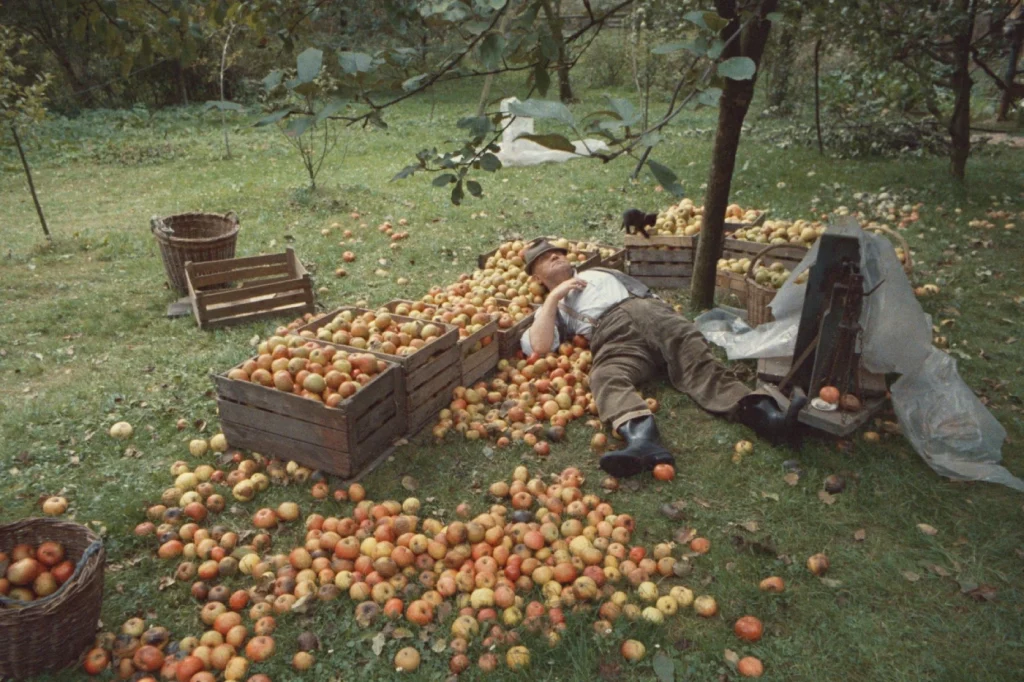
The story unfolds through a mosaic of eccentric residents, seasonal cottage dwellers, and local regulars who gather at the Hájenka restaurant, a real establishment in the village that also appears prominently in the film (and still operates as a restaurant today). Their lives intersect through a series of humorous and sometimes absurd episodes, culminating in a chaotic communal feast after a wild boar hunt.
Actors including Rudolf Hrušínský, Jaromír Hanzlík, and Josef Somr appeared in the film, while Hrabal himself made a brief cameo. Like many of Menzel’s adaptations, the film combines gentle humor with moments of melancholy, reflecting the tone that defines much of Hrabal’s writing.
More than four decades after its release, The Snowdrop Festival remains closely associated with Kersko, where visitors can still recognize many of the landscapes and settings seen on screen. The film can be seen with English subtitles on Netflix in Czechia.
Lead photo: Bohumil Hrabal’s cottage in Kersko courtesy Wikimedia Commons / ŠJů