
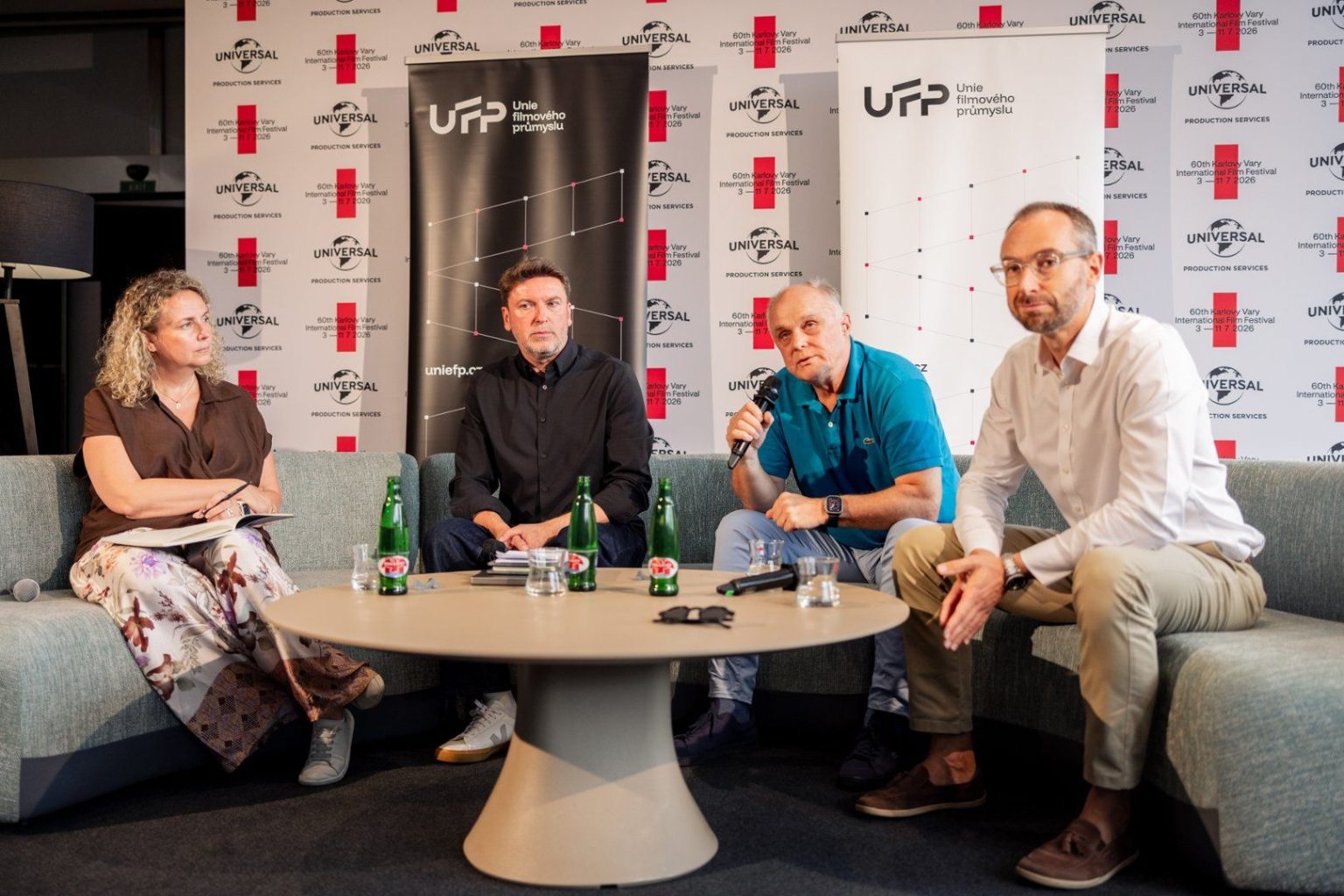
The Czech audiovisual sector has a new industry organization intended to bring together companies from across the country’s film production ecosystem under a single professional voice. The Association of Film Industry (UFP) was officially introduced during the 60th Karlovy Vary International Film Festival earlier this month.
The new association represents businesses spanning film production, studio operations, post-production, visual effects, production services, and film technology. Its founders say the organization will advocate for policies that strengthen the long-term competitiveness of the Czech audiovisual industry while highlighting its broader economic contribution beyond culture and entertainment.
A broader voice for the Czech audiovisual industry
The Association of Film Industry was presented at Karlovy Vary by chairman Petr Tichý of Barrandov Studio, vice chairman Radomír Dočekal of Prague Studios, and board member Tomáš Srovnal of PFX CZ. Alongside those companies, the founding members include Sirena Film, Film United, Stillking Films, Mia Film, Okko Production, and Czech Anglo Productions.
According to Tichý, the association’s mission is to support “the long-term development, prosperity, competitiveness, and sustainability of the Czech audiovisual industry.”
Unlike organizations that primarily represent producers, the new association aims to unite companies across the full production chain. Its membership encompasses studios, production companies, visual effects houses, post-production facilities, technology providers, and other businesses supporting film and television production.
The association argues that audiovisual production should be viewed not only as a cultural activity but also as a significant industrial sector. Film and television projects generate demand for construction, transportation, hospitality, catering, equipment rental, skilled trades, and other supporting industries, while attracting foreign investment through international productions filmed in the Czech Republic.
The organization also intends to serve as an expert partner for government institutions as policies affecting the audiovisual sector continue to evolve. Tichý said the association believes the Ministry of Industry and Trade, alongside the Ministry of Culture, should play a greater role in shaping policies affecting the film industry, reflecting its broader economic impact.
Incentives and international competitiveness remain key priorities
The association’s launch comes as the Czech Republic seeks to reinforce its position as one of Europe’s leading production hubs amid growing competition from neighboring countries.
Among its immediate priorities are promoting the country’s revised audiovisual incentive system to international producers, supporting further development of production and post-production infrastructure, expanding workforce training, participating in legislative discussions, and strengthening international cooperation.
Tichý said one of the association’s first initiatives will be presenting the Czech incentive system and domestic production services to international producers at the Toronto International Film Festival and accompanying industry market this September. The organization also plans meetings with government officials and lawmakers to discuss future development of the country’s incentive framework.
The timing follows significant reforms to the Czech audiovisual incentives system that took effect last year under the new Audiovisual Act. The revised program increased the standard production rebate from 20% to 25%, while qualifying animation and digital production activities can receive rebates of up to 35%. The legislation also substantially raised the maximum rebate available for individual projects, making the Czech Republic more competitive in attracting large-scale international productions.
The association has also announced its first regional partnership, signing a memorandum with the Karlovy Region Innovation Center to support development of the local film and audiovisual sector. The agreement focuses on expanding production and technology infrastructure, connecting schools with industry professionals, developing specialized education programs, and promoting the Karlovy Vary region as a filming destination for domestic and international productions.
While many of the association’s objectives overlap with issues long championed by existing industry organizations, its founders say its broader membership base distinguishes it from producer-focused groups. By representing studios, production service companies, technology firms, and post-production facilities alongside producers, the Association of Film Industry hopes to present a unified perspective on the economic and industrial needs of the Czech audiovisual sector.
Whether the organization can translate its broad ambitions into tangible policy changes remains to be seen. Its formation nevertheless reflects a growing emphasis within the Czech film industry on positioning audiovisual production not only as a cultural endeavor, but as a strategic export industry capable of attracting international investment, supporting skilled employment, and strengthening the country’s standing in the increasingly competitive European production market.
Lead photo: UFP press conference at the 2026 Karlovy Vary International Film Festival courtesy Film Servis Festival Karlovy Vary