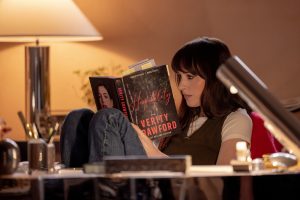

The new Czech feature film Broken Voices (Sbormistr), directed and co-written by Ondřej Provazník, has sparked debate within the local film community over its depiction of abuse within a children’s choir and its potential parallels to real events. The controversy has intensified as the film was recently named as a leading contender to represent Czechia in the 2026 Academy Awards.
Radovan Síbrt, a member of the Czech Film and Television Academy, issued an open letter urging the Academy to reconsider its support for Broken Voices. He argues that the film’s storyline closely resembles the personal history of his sister, a survivor of abuse connected to the real-life case involving the Bambini di Praga choir, and claims she was retraumatized by the film’s production.
Provazník has firmly denied that any of the film’s characters are based on specific individuals, insisting the story was developed as a fictionalized account inspired only in general terms by the choir’s history. The debate, however, highlights the complicated boundaries between creative expression and personal trauma in dramatizations of real events.
Director responds to criticism
In response to Síbrt’s letter, Provazník acknowledged that Broken Voices was inspired “in general terms” by the long-documented abuse scandal surrounding the Bambini di Praga children’s choir from the 1980s-2000s. He described the film as a composite story set in familiar circumstances such as choir retreats, foreign tours, and group dynamics that many former choir members could identify with.
While Provazník maintains that none of the characters represent real individuals, critics have pointed to several specific similarities between the film’s narrative and the real-life testimony of Síbrt’s sister, including the main character’s name—Karolína—and the time period, locations, and structure of events. Síbrt claims his sister was contacted during the research phase in 2019 and made it clear she did not wish to participate, citing the traumatic nature of her past experiences.
Provazník acknowledges that the character name match was an unfortunate coincidence but states he chose common Czech names—Karolína, Lucie, Anna, Kateřina—for narrative flexibility. He said he was alerted only later to the potential real-life connection but opted not to change the name, fearing it could instead highlight a different real person.
“I never claimed the film wasn’t inspired by the choir case,” Provazník said in a radio interview. “But these aren’t exclusive experiences. Sauna visits, first retreats, informal dynamics—these are shared experiences of dozens of girls, not unique to one story.”
Academy faces pressure amid Oscar selection process
The controversy arrives at a sensitive time for the Czech Film and Television Academy, which is in the midst of selecting the nation’s official entry for Best International Feature Film at the 2026 Oscars. With Broken Voices emerging as an early frontrunner, Síbrt’s open letter has added unexpected pressure to the selection process.
In his letter, Síbrt urges the Academy’s leadership to re-evaluate its endorsement of the film, citing ethical concerns and the emotional toll on survivors of the real events. While not questioning the film’s artistic merit, he suggests its candidacy for an international platform like the Oscars could inadvertently silence or retraumatize survivors who did not consent to having elements of their lives reflected on screen.
For his part, Provazník emphasized that he conducted extensive independent research for the screenplay over a period of nearly two years and intentionally avoided reviewing court records or victim testimony. “I didn’t read the legal files. I didn’t base characters on known victims,” he said. “This film is about two fictional sisters, their rivalry, and the systemic conditions that allowed abuse—not about one person.”
While Broken Voices has been widely praised for its nuanced storytelling and portrayal of power dynamics within institutional structures, its impact on those connected to the original case has stirred calls for greater sensitivity in how these stories are told and circulated.
Síbrt’s open letter is the second public attack on Broken Voices‘ potential pick as the Czech submission to the 2026 Academy Awards, following a report in Variety that highlighted changes in how the Czech Film and Television Academy conducts its selection process.
Regardless of the merits of either claim, the public attacks on Broken Voices are especially troubling given the real-life case that inspired the film: of Bambini di Praga conductor Bohumil Kulínský, who was convicted on more than 40 counts of rape and sexual abuse in 2008. Both during and after his highly-publicized trial, Kulínský formed ties to multiple prominent members of the Czech film community, ties that may still exist even seven years after his death.