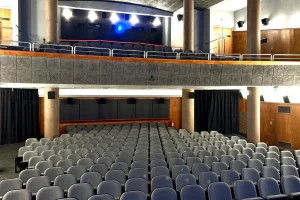

Prague audiences will have a rare opportunity to explore contemporary filmmaking from the Western Balkans as the BalCan CrossOver Fest returns to Kino Přítomnost for its fifth edition this weekend. The three-day program highlights new regional titles, many screening in Czechia for the first time, along with filmmaker discussions and cultural events.
The festival, part of the broader BalCan CrossOver Project, focuses on work from Bosnia and Herzegovina, Croatia, Serbia, Montenegro, North Macedonia, Slovenia, and related co-producing countries. With all screenings presented with Czech and English subtitles, the event is structured to be accessible to international viewers while maintaining its focus on regional storytelling.
Across the program’s lineup of films, this year’s selection emphasizes personal narratives, political histories, and coming-of-age perspectives from across the former Yugoslav region. Several titles arrive directly from festival circuits, offering Prague viewers early access to emerging work from both established and debut directors.
Exploring regional histories
Among the Czech premieres is Blum: Masters of Their Own Destiny, a documentary by Bosnian director Jasmila Žbanić. The film revisits the story of Emerik Blum, an entrepreneur who built Energoinvest into a major industrial conglomerate in socialist Yugoslavia. Drawing on archival footage and first-person accounts, the documentary examines how Blum navigated the geopolitical space between the Eastern and Western blocs to create a globally active company.
Also premiering locally is This Is Not a Love Song, a Croatian-Slovenian drama from director Nevio Marasović. Set around a reunion between a filmmaker and his former partner, the story unfolds in a lakeside hotel where the pair revisit their past while attempting to write a screenplay based on their failed relationship.
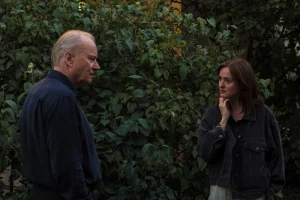
Montenegro-Serbia-North Macedonia co-production Planet 7693 (pictured at top) introduces audiences to Luka, a young boy whose family begins to unravel after a late-term pregnancy loss. Director Gojko Berkuljan positions Luka’s retreat into fantasy as both coping mechanism and narrative device, blending realistic domestic tensions with elements of magical realism.
Croatian-Lithuanian-Slovenian feature Sandbag Dam shifts the focus to rural life and questions of identity. Director Čejen Černić Čanak follows Marko, a young man comfortable in the rhythms of village life until the return of his childhood friend Slaven forces him to confront suppressed feelings and shifting expectations. The film—Čanak’s feature debut—has already screened at the Berlin International Film Festival and earned recognition at the Pula Film Festival.
Fiction debuts and Balkan stories
Goran Stolevski’s Housekeeping for Beginners, produced across Croatia, North Macedonia, Poland, and Serbia, brings a cinéma-vérité approach to the story of Dita, a woman who unexpectedly becomes the caretaker of two girls after the illness of her partner, Suada. The film blends found-family dynamics with an examination of social pressures, using a mix of non-professional and professional actors to create a grounded portrayal of domestic life and LGBTQ+ community resilience.
In the Serbian-Croatian film Sweet Sorrow, director Kosta Djordjević follows Relja, a teenager dealing with his grandmother’s death and an increasingly complex relationship with his mother. As Relja attempts to arrange the funeral—largely to impress a classmate—the film navigates the intersection of grief, coming-of-age impulses, and family conflict.
Celebration, a Croatian-Qatari co-production directed by Bruno Anković, adapts Damir Karakaš’s novel Proslava. Set in a poor Croatian village from 1926 to 1945, the film depicts the hardships of rural life through the story of Mijo, a boy whose worldview is shaped by shifting political realities and the seductive pull of extremist ideology.
Bosnian director Pjer Žalica’s May Labor Day examines the aftermath of war through the lens of a neighborhood preparing for holiday festivities. What begins as a cheerful community gathering is disrupted when police arrive to arrest one resident for a wartime crime.
Rounding out the festival on Sunday evening is 78 Days, the debut feature from Serbian director Emilija Gašić. Told through the format of a video diary, the film documents three sisters living in the countryside during the 1999 NATO bombing. By focusing on the girls’ daily routines—games, arguments, friendships—the film contrasts the mundanity of adolescence with the backdrop of war.
The BalCan CrossOver Fest offers Prague audiences an accessible entry point into the region’s evolving film landscape, presenting a mix of premieres, debuts, and festival selections. With its focus on personal narratives and political histories, the program highlights the range of contemporary Balkan storytelling and provides a platform for filmmakers whose work is not frequently screened in Czech cinemas.