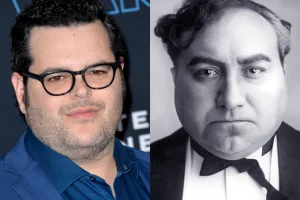

Gerron’s Last Film, a historical drama starring Josh Gad, is slated to being filming in the third quarter of 2026 across Germany and the Czech Republic. The film tells the true story of Kurt Gerron, a celebrated Jewish actor and director in pre-Nazi Germany who was forced by the Nazis to make a propaganda film while imprisoned in the Theresienstadt Ghetto in Terezín.
UK filmmaker Simon Curtis, whose credits include Woman in Gold and Downton Abbey: The Grand Finale, is set to direct. Gerron’s Last Film is produced by Talia Kleinhendler and Osnat Handelsman Keren of Pie Films, via the company’s recently launched UK office. The script, penned by Ehud Lavski and Alon Gur Arye, highlights Gerron’s moral and artistic struggles during one of history’s darkest chapters.
“This is a film that will be universally spoken about and responded to,” Gad said in a press statement. “These themes are more relevant today than they have been in decades. I got into this industry to make movies that are important, that can create conversations, and I strongly know in my heart that this is one of those films.”
Bringing Kurt Gerron’s story to the screen
Kurt Gerron (1897–1944) was a multi-talented performer in Berlin, known for his cabaret work, stage performances, and early film roles. He gained widespread recognition for his portrayal of Tiger Brown in the Berlin premiere of The Threepenny Opera in 1928 and appeared alongside Marlene Dietrich in The Blue Angel in 1930. Despite offers to work abroad, Gerron remained in Europe as the Nazi regime took hold, ultimately facing persecution for his Jewish heritage.
After fleeing Germany, Gerron continued to perform in Paris, Vienna, and Amsterdam, refusing Hollywood opportunities. Following the Nazi occupation of the Netherlands in 1940, he was eventually deported with his wife to the Westerbork transit camp and then to Terezín in 1944.
In Terezín, Gerron was coerced into directing a propaganda film intended to portray the ghetto as a “model” Jewish settlement for foreign audiences. Gerron and his wife were deported to Auschwitz and killed shortly after completing the project. Only fragments of the film, available to watch at the website of the United States Holocaust Memorial Museum, survive today.
Curtis, reflecting on Gerron’s story, emphasized the creative and ethical dimensions of the project. “I feel very passionately about telling Kurt Gerron’s remarkable story which offers so many exciting creative opportunities to a filmmaker,” Curtis said. “It demonstrates how vital the arts are in dark times and its themes are becoming more essential every day.”
Production plans and creative vision
Principal photography for Gerron’s Last Film is expected to take place in Germany and the Czech Republic, including Prague, where filmmakers often recreate historic European locations. Pie Films’ producers described Gerron as “larger than life,” noting that Josh Gad’s versatility makes him well-suited to capture the actor-director’s complex personality.
The film is positioned as a serious biographical drama, exploring the intersection of artistry, coercion, and survival under oppressive regimes. Curtis and Gad aim to balance historical accuracy with a compelling character study, highlighting Gerron’s artistic brilliance amid impossible circumstances.
The decision to film in Prague underscores the city’s continued relevance as a hub for European historical dramas, offering filmmakers both authentic settings and experienced production support.
Previous Holocaust films that have been shot in the Czech Republic include Avenue of the Giants, One Life, and The Painted Bird. The story of the Theresienstadt Ghetto is also told in legendary documentarian Claude Lanzmann’s The Last of the Unjust.