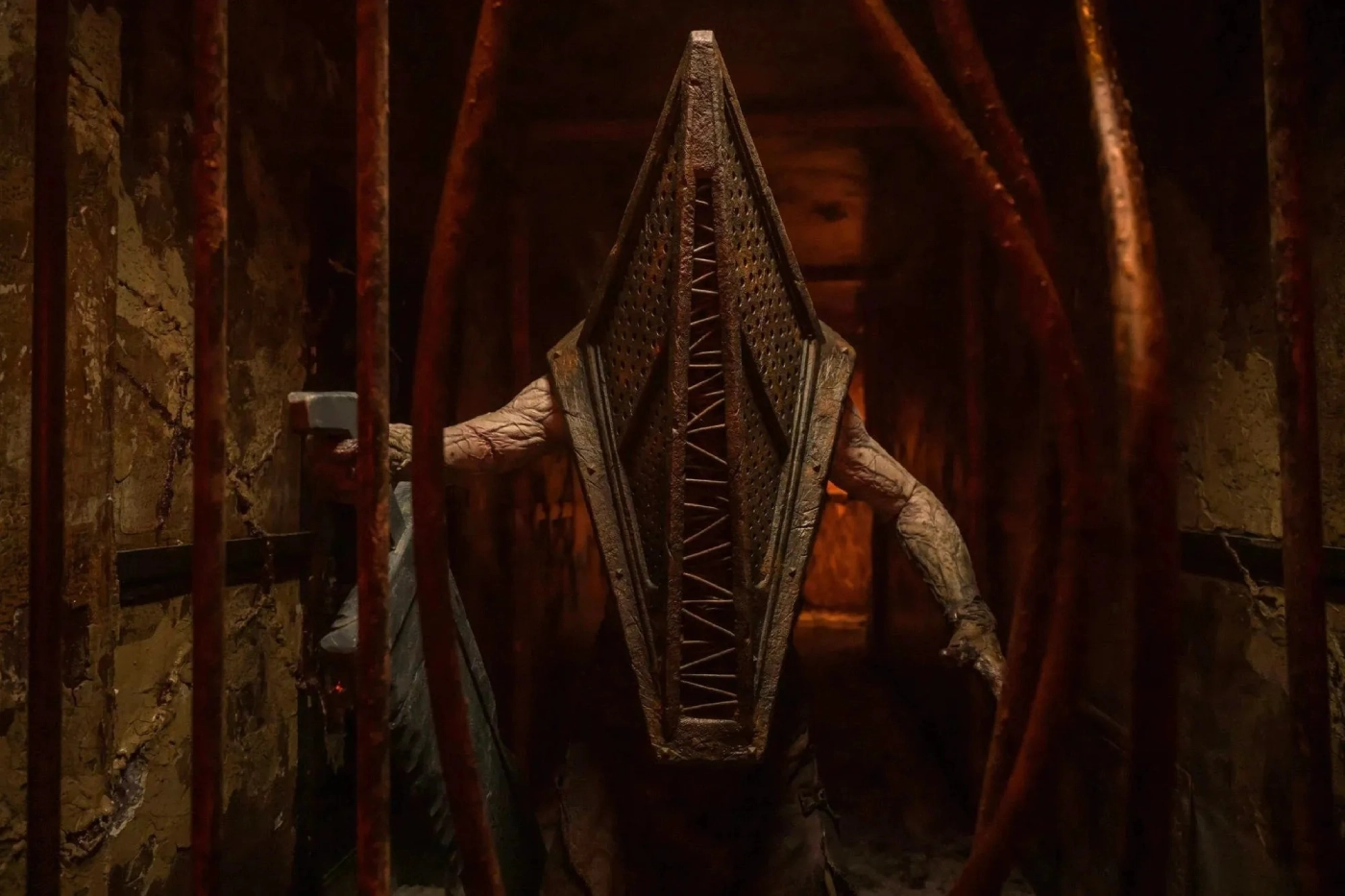
A man wanders around an abandoned town inhabited by monsters in search of his ex-girlfriend in Return to Silent Hill, the latest adaptation of the popular video game series opening in Prague and cinemas worldwide this weekend. This pared-back return to the franchise, a direct and largely faithful adaptation of 2001’s Silent Hill 2 (which itself received a remake in 2024), looks great and boasts some excellent creature effects, and may please fans of the games; for anyone else, the near-complete lack of anything interesting at the script level results in a tortuous sit, in all the wrong ways.
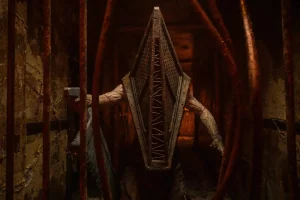
Director Christophe Gans‘ first take on Silent Hill in 2006 was largely dismissed by critics and sparked backlash from fans for key changes made to the story from the first game, but has become something of a cult hit over the past two decades. A lot of that is down to the horror atmosphere and creature effects, which is where Return to Silent Hill succeeds as well: scenes of the ash-covered central setting (played by locations in Germany and Serbia) are hauntingly beautiful as captured by cinematographer Pablo Rosso, and the monsters—created largely through prosthetic effects—are inventively and grotesquely designed.
Unfortunately, that’s about all the praise that can be layered on Return to Silent Hill, which is otherwise a dull, listless presentation almost entirely devoid of tension, drama, or even horror. In (mostly*) faithfully transitioning the video game to the screen, Gans and co-writer William Josef Schneider (2024’s The Crow) have failed to properly adapt it for viewers watching the story unfold rather than playing it, and we’re left with endless scenes of our protagonist blindly walking around in search of his ex.
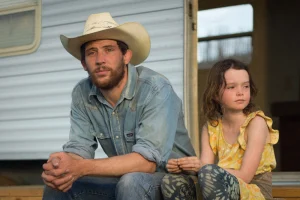
Mary? Mary? Mary, is that you? Despondent, alcoholic artist James Sunderland (a committed Jeremy Irvine) is drawn back to Silent Hill, the town he once lived in with Mary Crane (Hannah Emily Anderson), after receiving an ominous letter from her requesting help. Only problem: the once-picaresque lakeside locale is now an abandoned ghost town covered in continually falling ash.
“Forest fires,” Angela (Eve Macklin) tells him while dragging sandbags from the cemetery to the river. Uh-huh. And what about when the bell rings, James gets a headache, the whole place turns red, and monsters start to crawl out? In the film’s most bravura grossout moment, an armless, acid-spitting Lying Figure melts a homeless man (Matteo Pasquini) into a pile of goo as James finally realizes that something just might not be right in this town.
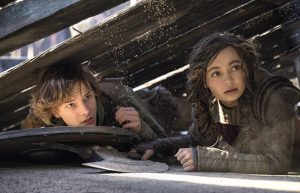
But where is Mary? As James walks through the apartment building they once shared, he encounters the rather unhelpful Eddie (Pearse Egan), the frightened young doll-clutching Laura (Evie Templeton), and our old pal Pyramid Head, who goes toe-to-toe with a humanoid spider monster before turning his attention to James. Then there’s Maria (also played by Anderson), who tags along with James in his search for Mary on the promise that they’ll leave town once he finds her… or doesn’t.
Because there’s no sense of internal logic in Gans’ depiction of Silent Hill—no underlying reason why the monsters are doing what they’re doing, or why the human characters are just dawdling around instead of clearing out—even viewers who haven’t played the game will infer that something’s up early on, and that what we’re watching isn’t necessarily an accurate depiction of the film’s reality. The presence of James’ therapist (Nicola Alexis) also hints that this character may not be a reliable narrator.
In Return to Silent Hill‘s biggest departure from Silent Hill 2, a convoluted new backstory is conveyed through flashbacks intercut with the main narrative. It involves Mary’s father, who has been poisoning her since she was a child (for some reason), and the old Silent Hill cult, who feast on her blood (for some reason). But Gans’ fractured depiction of the flashback scenes means we don’t really trust this reality either. At one point, James is traversing dark underground corridors in search of Mary in both the flashbacks and in the present-day narrative. Mary? Mary?
Like Silent Hill 2, Return to Silent Hill features multiple endings (some pulled directly from the game), but like everything else we have just watched, we’re not sure if they’re “real” or not. The entire theme of the game, James’ journey through guilt and loss, may be entirely lost on viewers who are coming into the movie fresh, because the explanation is presented so haphazardly in concert with all the other imaginary things going on.
For franchise fans, Return to Silent Hill is the best the series has looked on the big screen, and a largely faithful re-creation of the best game in the series, and that might be enough to excuse the deeply-flawed storytelling. For anyone else, even the much-derided sequel Silent Hill: Revelation presented a more coherent narrative. Give it another 20 years, and maybe this one can build up a cult of its own; or wait till September, and see what Zach Cregger can do with Resident Evil.