
The Czech film industry marked a significant moment on Oscar nominations morning as Mr Nobody Against Putin secured a nomination for Best Documentary Feature at the 98th Academy Awards. The politically charged documentary, a Czech-Danish co-production, was named among the Academy of Motion Picture Arts and Sciences’ five finalists, capping a year-long awards run that began on the international festival circuit.
The nomination follows an already strong showing for Czech cinema this Oscar season. Mr Nobody Against Putin was one of two Czech productions to reach the Academy’s shortlist of 15 in their respective categories, alongside Jan Saska’s animated short Hurikán, which was shortlisted for Best Animated Short Film but ultimately did not advance to the final nominations.
For Mr Nobody Against Putin, the Oscar recognition places a spotlight on a film that blends first-hand testimony with broader questions about propaganda, education, and moral responsibility in contemporary Russia—while also highlighting the increasingly central role Czech producers and post-production houses play in internationally recognized documentaries.
From a classroom in Russia to the Oscar stage
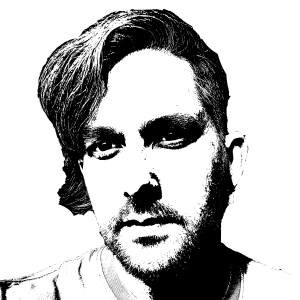
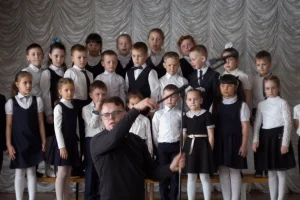
Directed by David Borenstein and Pavel “Paša” Talankin, who currently lives in Prague, Mr Nobody Against Putin follows Talankin, an elementary school teacher in the industrial town of Karabaš in Russia’s Chelyabinsk region. After Russia’s full-scale invasion of Ukraine in 2022, Talankin was instructed to film patriotic lessons and state-mandated activities at his school. Instead, he began documenting the atmosphere of fear, indoctrination, and moral compromise surrounding him.
“Every day, I had to film children reciting slogans and teachers repeating lies,” Talankin said in a statement included with the film’s release. “One day I asked myself if I had the moral right to delete those recordings. I decided I didn’t.”
The footage—recorded under increasing personal risk and later smuggled out of Russia—became the backbone of the 102-minute documentary. Talankin eventually fled the country and was granted asylum in the European Union. “If I were still in Russia, I’d already be in prison for many years,” he said at the film’s Prague premiere.
The project was produced by Denmark’s Made in Copenhagen in collaboration with Prague-based PINK Productions, led by producers Radovan Síbrt and Alžběta Karásková. Síbrt previously described the early stages of the project as shrouded in secrecy, recalling initial conversations with Danish producer Helle Faber about “a mysterious man in Russia filming military propaganda in schools.”
Since its world premiere at the Sundance Film Festival—where it won the Special Jury Award in the World Cinema Documentary Competition—the film has screened at more than 100 festivals worldwide, collecting 14 major prizes and several special mentions. These include awards from Cinetopia in the United States, Biografilm in Italy, DocsBarcelona in Spain, and ZagrebDox in Croatia.
Czech creative fingerprints
While the story unfolds in Russia, much of the film’s final shape was forged in Czechia. Post-production was handled by Prague’s UPP studio under Ivo Marák, with an original score composed by Michal Rataj. Visual materials were contributed by photographer František Svatoš, and the project received backing from the Czech Audiovisual Fund, Czech Television, and the Czech Film Center.
The film has also resonated with Czech audiences. After screenings at the One World Film Festival, it received the Audience Award at the Ji.hlava International Documentary Film Festival and opened theatrically in Czech cinemas in November through distributor Bontonfilm.
The Prague Reporter described the film as “an urgent and invaluable document of life inside contemporary Russia,” calling it “eye-opening” and “heartbreaking” in its depiction of the state-enforced militarization of education. The review noted that Talankin’s access and filmmaking instincts give the footage “a stark precision that is often heartbreaking,” adding that the documentary is less about the battlefield than “how the system is indoctrinating a generation of people into being prepared for a life of unending war.”
The Oscar nomination places Mr. Nobody Against Putin among a competitive Best Documentary lineup, but it also carries symbolic weight for Czech producers. Karásková has described the awards campaign as “a culmination of a long and difficult journey,” emphasizing that the project’s international reception reflects both artistic achievement and the importance of cross-border collaboration.
Mr. Nobody Against Putin will now compete against The Perfect Neighbor, The Alabama Solution, Come See Me In the Good Light, and Cutting Through Rocks for Best Documentary at the 2026 Academy Awards, which will be presented in Los Angeles on Sunday, March 16.
The nomination for the Czech co-production is something of an upset, as Mr. Nobody Against Putin overtook presumptive favorites 2000 Meters to Andriivka and Cover-Up to land a spot in the final five. With the nomination, Czech documentary craftsmanship has secured one of its most visible platforms to date—bringing a deeply personal story, and the creative work behind it, to a global audience.