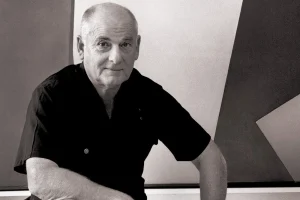

Oscar-winning Czech costume designer Theodor Pištěk, whose work on Miloš Forman’s Amadeus helped define one of the 1980s’ most acclaimed films, died Wednesday, Dec. 3, at the age of 93, his family confirmed to local media. Pištěk’s contributions to Forman’s American period drama earned him the Academy Award for costume design in 1985, establishing him as one of the most respected visual artists working between European and U.S. cinema.
Pištěk’s collaborations with Forman extended beyond Amadeus. He received France’s César Award for his work on Valmont in 1990 and later rejoined the director for The People vs. Larry Flynt in 1996. His designs, known for their historic detail and sculptural precision, were widely regarded as essential to the visual identity of Forman’s later films.
While his international reputation grew through cinema, Pištěk was equally influential in Czech fine arts, motorsport, and stage design. His diverse career, stretching across painting, modern art, and even professional auto racing, made him one of the most multifaceted Czech cultural figures of his generation.
Forman collaborations shaped film legacy
For international audiences, Pištěk became best known through his work in film, particularly his long-running collaboration with Miloš Forman. Their partnership began decades after Pištěk had established himself in the Czech film industry through contributions to landmark works such as František Vláčil’s Marketa Lazarová and The Valley of the Bees, both recognized for their rigorous medieval atmosphere and demanding period detail.
Amadeus marked Pištěk’s breakthrough outside Central Europe. His lavish 18th-century designs—layered fabrics, ornate ceremonial attire, and richly constructed silhouettes—were central to the film’s visual world and helped anchor its theatrical sensibility. The costumes were praised for balancing historical accuracy with cinematic spectacle, a hallmark that would define Pištěk’s subsequent work.
For Valmont, Forman again relied on Pištěk’s ability to navigate the complexities of period wardrobe. The film’s refined but understated costume palette earned him a César Award and another Oscar nomination. Despite working within a Hollywood system, Pištěk maintained an artistic independence rooted in his background as a painter and scenographer. He became a member of the Academy of Motion Picture Arts and Sciences and continued to exhibit internationally, often showcasing his costume sketches alongside his fine art.
Even projects where Pištěk’s work was less publicly visible reflected his multidisciplinary skill set. He contributed to design concepts, exhibition installations, and, early in his career, the visual environment of Czech New Wave productions. By the time he worked on The People vs. Larry Flynt, his reputation for crafting historically grounded yet expressive visual languages was firmly established.
An artist with deep ties to Czech history
Born in Prague in 1932 into a family with a long artistic lineage—parents Theodor Pištěk and Marie Ženíšková were both actors—Pištěk grew up surrounded by performance and visual culture. He studied at the Academy of Fine Arts, where he worked alongside figures such as Jan Koblasa, Karel Nepraš, and Hugo Demartini. His early involvement with avant-garde circles helped shape a visual vocabulary that would continue to inform both his painting and his design work.
Parallel to his artistic pursuits, Pištěk had a serious passion for automobiles. He competed in European circuit racing in the 1960s and 1970s, later applying his mechanical understanding to film projects and even drafting a screenplay for a racing-themed film with Vláčil. His technical precision on the racetrack mirrored the meticulous craftsmanship that defined his film costumes and paintings.
Following the Velvet Revolution, Pištěk was commissioned to redesign the uniforms of the Prague Castle Guard for President Václav Havel, a project that blended military formality with aesthetic restraint. Havel later awarded him the Medal of Merit, First Class, in 2000. Pištěk also co-founded the Jindřich Chalupecký Award, which became a key recognition for young Czech artists.
Throughout the 2000s and 2010s, Pištěk continued to paint and exhibit widely. He received accolades including the Czech Lion for lifetime artistic achievement, the Karlovy Vary International Film Festival’s Crystal Globe for outstanding artistic contribution to world cinema, and the Golden Slipper from the Zlín Film Festival. Major retrospectives, including a large exhibition at Prague’s National Gallery, reaffirmed his standing as a central figure in Czech visual culture.
Pištěk lived for many years on Radhošťská Street in Prague’s Žižkov neighborhood, and spent his later years working from his home and studio in Mukařov, remaining active in painting and engaged with artistic institutions. His death marks the end of a career that bridged film, art, design, and more, leaving an imprint recognized across multiple disciplines.
Lead photo: Theodor Pištěk in 2011 courtesy Wikimedia / Jiří Jiroutek