
Prague’s FilmAsia festival will mark its 20th edition this December with a program that looks back at two decades of showcasing contemporary Asian cinema while introducing new titles to local audiences. The event, running Dec. 4–12 at the newly-renovated Bio Oko, remains a key annual showcase for films from across East and Southeast Asia.
Since its launch in 2005, FilmAsia has highlighted works that have shaped global festival circuits, and hosted filmmakers such as Ann Hui, Mabel Cheung, Bong Joon-ho, and Hou Hsiao-hsien. This year’s lineup continues that approach but organizes the selection around the unifying theme “Twists and Returns,” reflecting both narrative experimentation and the festival’s own long-term trajectory.
With nine films from five countries divided into three thematic sections, the 2025 edition offers a mix of recent releases and established classics. All screenings will feature Czech and English subtitles.
Reimagining transitions and the afterlife
FilmAsia’s first section, titled Life After Life, examines how filmmakers approach themes of death, memory, and continuity. Rather than framing the afterlife through genre convention alone, the selected films engage with cultural traditions, family dynamics, and allegorical storytelling.
The opening night film, The Last Dance, presents director Anselm Chan’s perspective on modern Hong Kong through a subdued drama about generational change. The film stages a dialogue between tradition and contemporary values while using the motif of death as a point of reflection rather than spectacle.
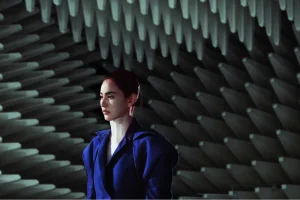
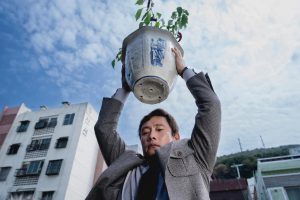
Chan’s work is contrasted with the Thai feature A Useful Ghost (pictured at top), directed by Ratchapoom Boonbunchachoke, which blends slow-cinema aesthetics with absurdist humor. Its narrative follows a woman whose presence lingers after death in unconventional and occasionally comedic forms, illustrating a distinct cultural interpretation of attachment and loss.
The Korean film My Daughter Is a Zombie completes the section with a mixture of social commentary and family-centered storytelling. Director Pil Gam-seong combines elements of the country’s established zombie genre with a more personal narrative about parental bonds and emotional reconciliation. Together, the three films present varied approaches to the idea of continuity beyond death, from symbolic renewal to literal resurrection.
Revisiting classics and spotlighting women-led stories
The Survival Mode section revisits two classic titles known for their narrative intensity and social critique. Battle Royale, directed by Kinji Fukasaku, returns to the big screen more than two decades after its release. The Japanese cult film is recognized for its satirical and violent depiction of competition, discipline, and youth culture, drawing parallels to broader social pressures.
On a recent episode of the Bret Easton Ellis Podcast, director Quentin Tarantino listed Battle Royale at number 11 among his favorite films of the 21st century.
Park Chan-wook’s Oldboy, another influential work, explores themes of revenge, trauma, and moral ambiguity. Although widely known for its stylized action, its inclusion within this section emphasizes the film’s meditation on endurance and psychological survival following imprisonment and loss.
Park’s recent satire No Other Choice, now playing in Prague cinemas, will screen as a double-feature alongside Oldboy at the FilmAsia festival, giving audiences a chance to compare two of the director’s most acclaimed works. The Prague Reporter called No Other Choice a “masterfully-directed black comedy that rates alongside Oldboy and The Handmaiden” as one of the director’s best movies.
FilmAsia’s third section, Under Pressure, shifts focus to women-driven narratives and stories shaped by systemic or social constraints. Stanley Kwan’s Center Stage pays tribute to early Chinese screen icon Ruan Lingyu through a hybrid biographical form that blends archival material, dramatization, and film history.
Kwan also produced Someone Like Me, directed by Tam Wai Ching, which offers a contemporary Hong Kong social drama centered on the daily realities of people with disabilities. The film presents personal relationships and caregiving dynamics without sensationalizing its subjects.
Taiwanese director Huang Xi’s Daughter’s Daughter, developed under the mentorship of Hou Hsiao-hsien, explores intergenerational tensions and unresolved trauma through its portrait of a family confronting decades-old emotional wounds.
More information about this year’s FilmAsia fest and a full program can be found at the official festival website.